When selecting a compressed air piping system, many buyers still focus on upfront material cost. However, in modern industrial environments, efficiency, reliability, air quality, and long-term operating costs are far more critical. While steel piping has long been the traditional choice, aluminium piping systems with advanced aluminium pipe fittings are now the preferred solution for high-performance compressed air distribution.
A well-designed compressed air piping network directly affects airflow efficiency, pressure stability, energy consumption, and equipment lifespan. In this comparison, we evaluate aluminium vs steel piping across key efficiency parameters to determine which solution delivers the highest return on investment.
Understanding Efficiency in Compressed Air Piping Systems
Efficiency in compressed air distribution refers to how effectively air moves from the compressor to the point of use with minimal losses. Key factors include:
- Internal pipe surface smoothness
- Pressure drop and energy demand
- Leakage at joints and fittings
- Installation and maintenance effort
- System flexibility and scalability
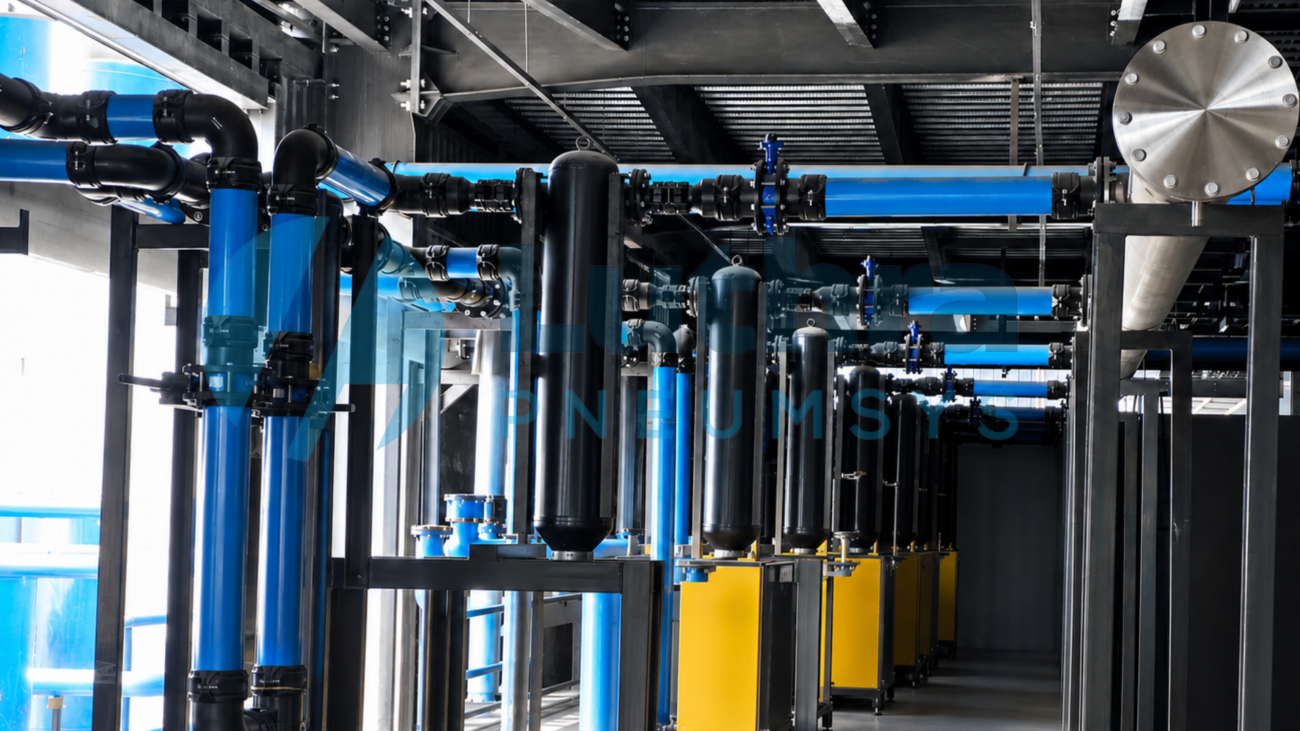
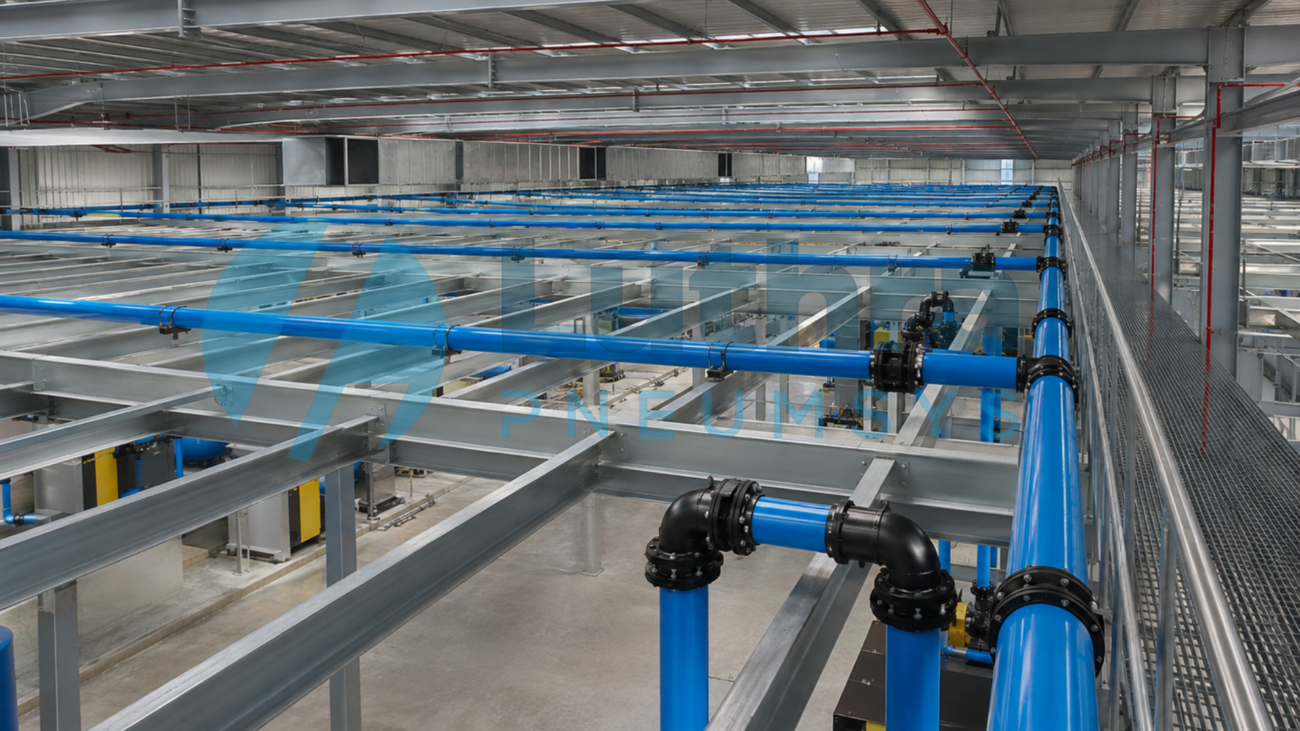
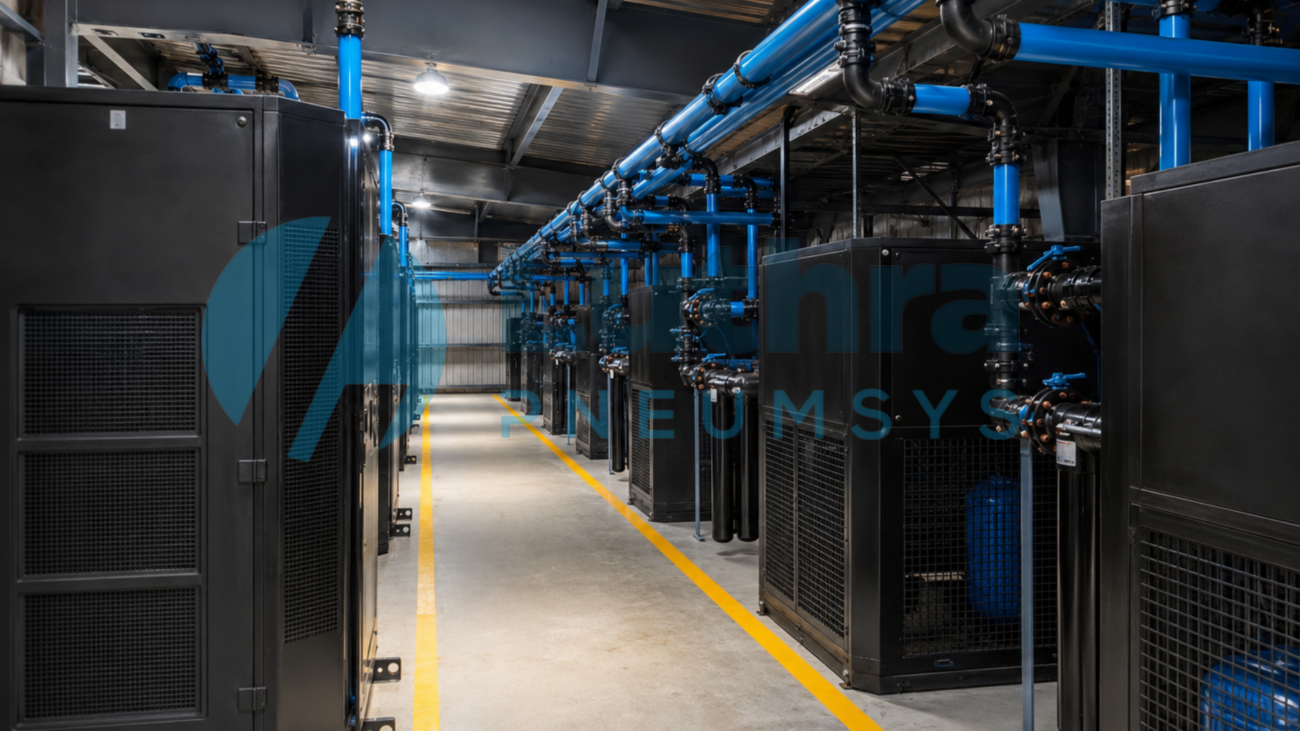
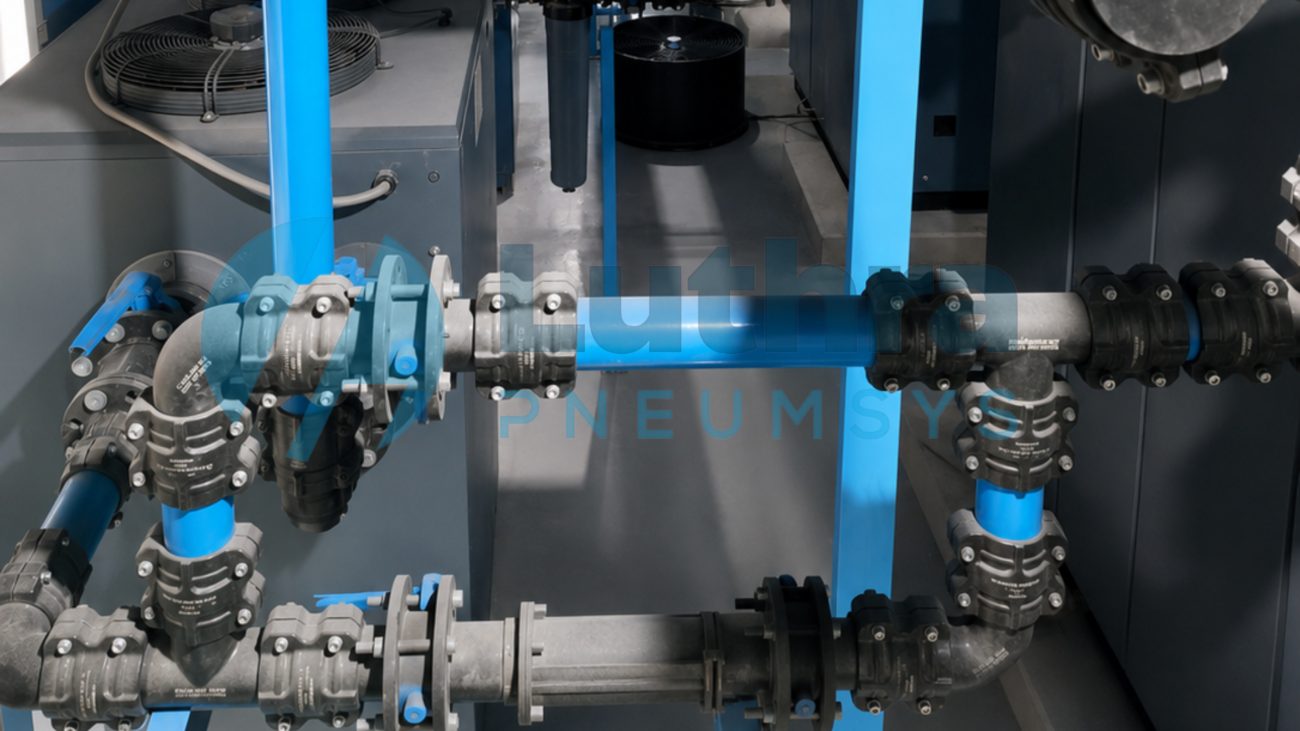
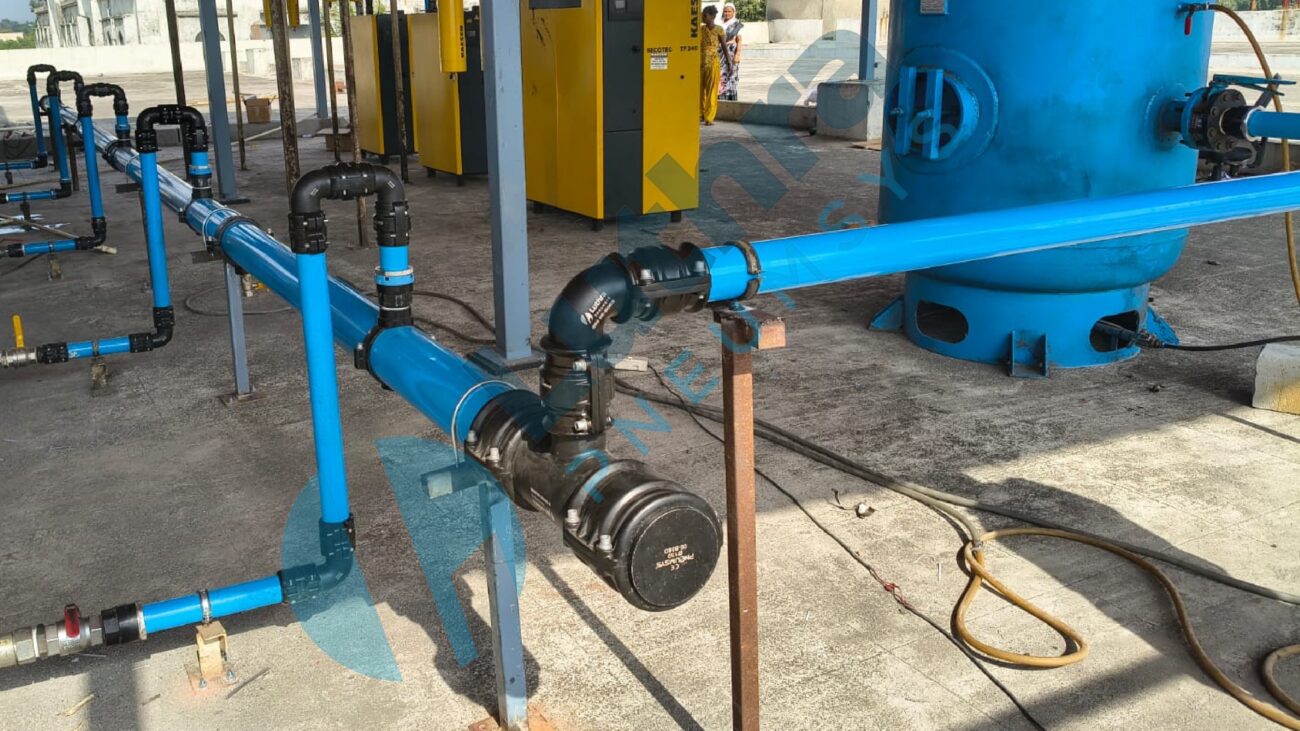
Modern facilities increasingly adopt press-fit aluminium fittings, modular layouts, and quick-installation compressed air piping systems—areas where aluminium clearly outperforms steel.
1. Flow Efficiency: Aluminium Pipe Fittings vs Steel Connections
Aluminium Pipes and Aluminium Pipe Fittings
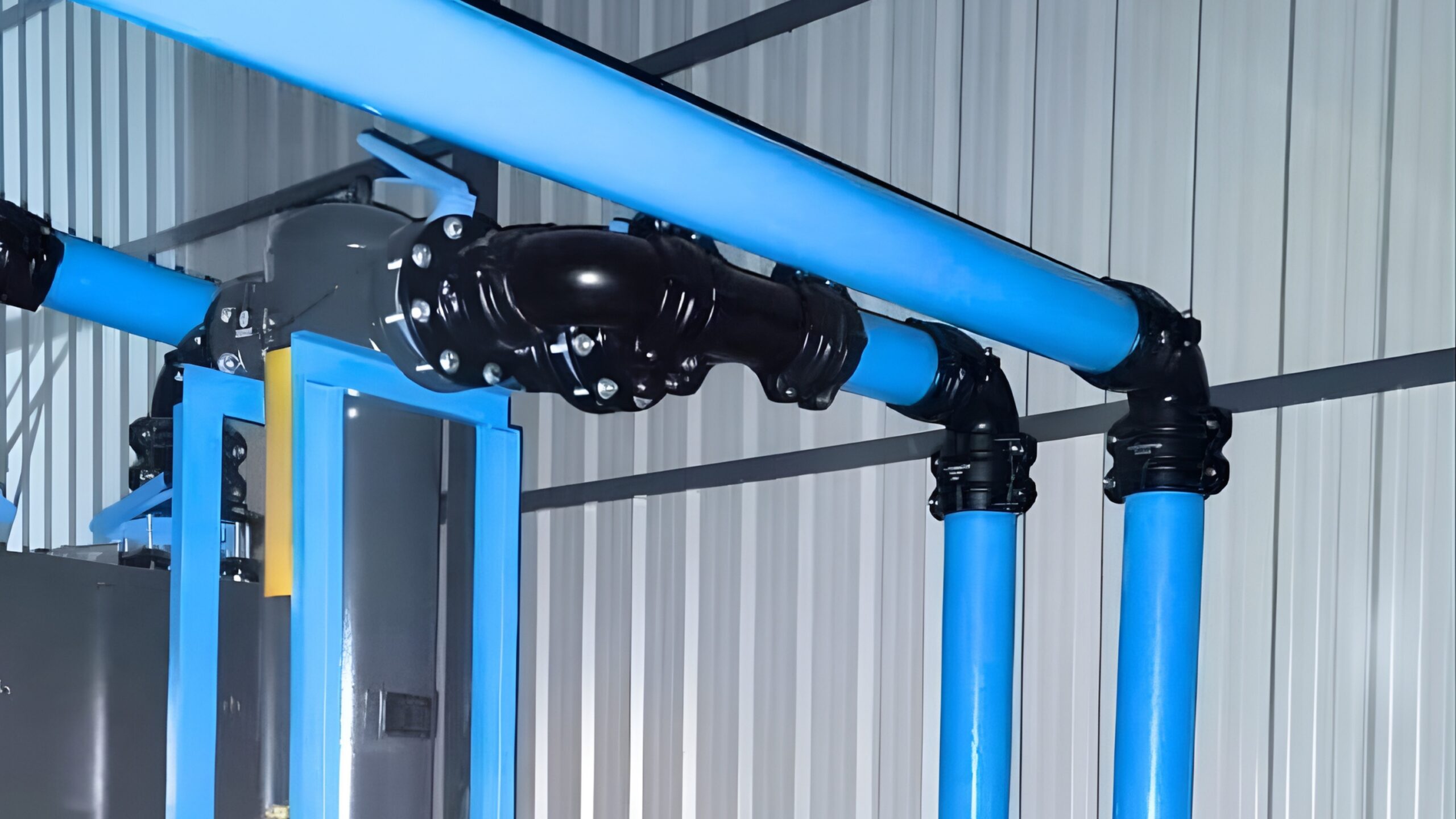
Aluminium pipes are produced using precision extrusion, resulting in an ultra-smooth internal surface. When combined with high-quality aluminium fittings, the system maintains a consistent internal diameter throughout the network. This minimizes turbulence and allows compressed air to flow efficiently—even at high demand.
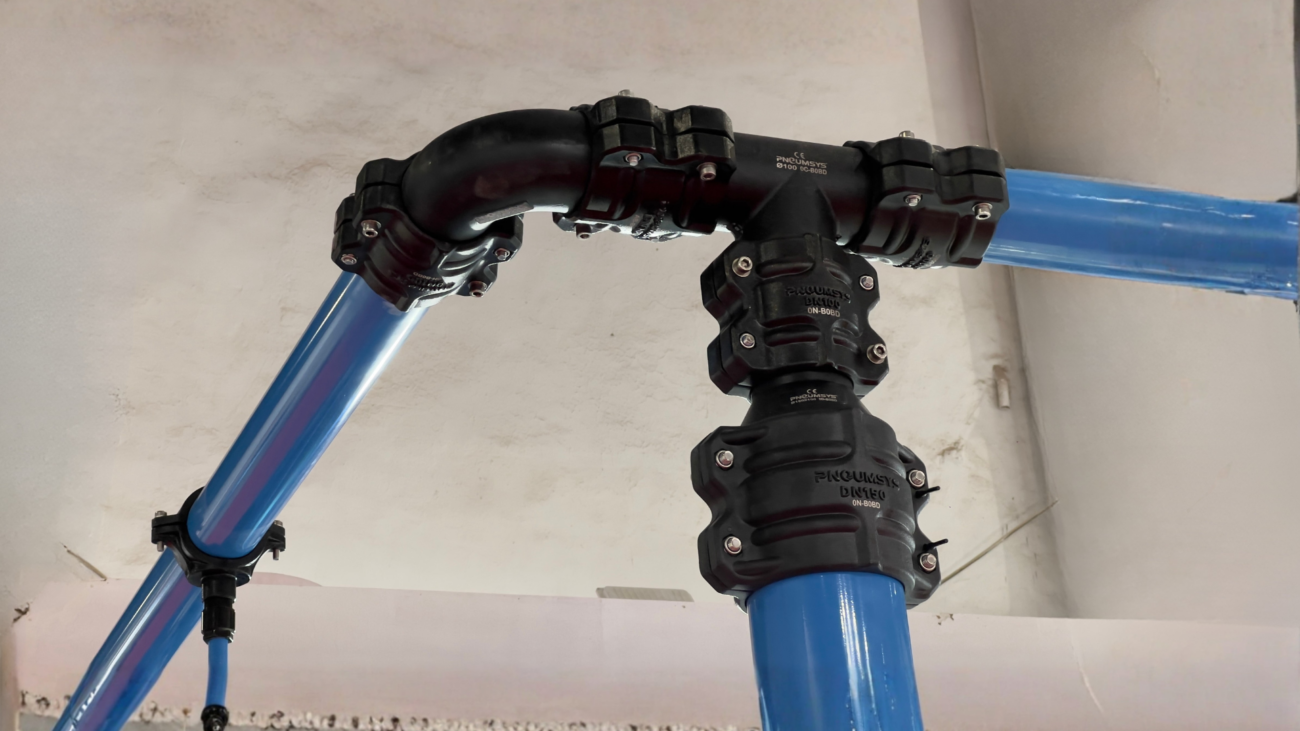
Push-in and press-fit aluminium pipe fittings eliminate internal restrictions commonly found in threaded steel joints.
Steel Pipes: Friction and Corrosion
Steel pipes have rough internal surfaces from the start. Over time, moisture causes corrosion, rust, and scale buildup. Threaded steel fittings further disrupt airflow, increasing friction and pressure loss across the system.
Efficiency Impact
Smooth aluminium pipes with engineered aluminium fittings can reduce pressure drop by up to 50% compared to aging steel systems—delivering consistent airflow to tools, automation equipment, and pneumatic systems.
2. Energy Efficiency: Pressure Drop and Power Consumption
Compressed air is one of the most expensive utilities in any industrial facility.
The 1:7 Energy Rule
For every 2 PSI of pressure drop, compressors consume approximately 1% more energy. Even minor inefficiencies in piping and fittings significantly increase electricity costs.
Steel System Limitations
Corrosion reduces the effective internal diameter of steel pipes and threaded joints. To compensate, operators raise compressor pressure—leading to:
- Higher energy consumption
- Increased compressor wear
- Shorter equipment lifespan
Aluminium Pipe Fittings Advantage
Aluminium does not rust, and aluminium fittings maintain airtight seals for decades. This allows compressors to run at lower pressure setpoints, reducing annual energy consumption by 10–15% in many facilities.
3. Leakage Performance: Aluminium Pipe Fittings vs Threaded Steel Joints
Air leakage is one of the most overlooked losses in compressed air systems.
Steel Pipe Weakness
Threaded and welded steel joints are prone to micro-leaks caused by vibration, temperature changes, and aging sealants. These hidden leaks silently waste compressed air and energy.
Aluminium Pipe Fittings Strength
Modern aluminium pipe fittings use:
- O-ring seals
- Push-in or press-fit connections
- Vibration-resistant designs
These fittings are engineered for long-term airtight performance.
Leakage Impact
Aluminium systems with aluminium pipe fittings: <1% leakage
Steel piping systems: 20–30% air loss is common
4. Installation Speed and System Flexibility
Quick Installation Advantages
Faster Installation
Aluminium piping weighs nearly one-third of steel, making handling easier and safer. Using aluminium fittings, installation time can be reduced by up to 70%, with no welding or threading required.
Modular Expansion
Aluminium pipe fittings allow easy system modifications. New drops or production lines can be added without shutting down the entire system—ideal for growing plants and automation upgrades.
5. Maintenance, Air Quality, and Equipment Protection
Steel pipes shed rust flakes that contaminate compressed air, damaging valves, actuators, and pneumatic cylinders while increasing filter maintenance.
Aluminium pipes and aluminium fittings deliver clean, oil-free, rust-free air, protecting sensitive pneumatic equipment and extending service life.
Total Cost of Ownership (TCO): Aluminium vs Steel
Although aluminium piping systems have a higher initial cost, aluminium pipe fittings significantly reduce lifetime expenses through:
- Lower energy consumption
- Minimal leakage
- Faster installation
- Reduced maintenance
- Longer service life
- Easy future expansion
Over time, aluminium offers the lowest total cost of ownership for compressed air distribution.
Final Verdict: Best Piping System for Compressed Air
For modern industrial facilities prioritizing efficiency, reliability, and scalability, aluminium piping with high-quality aluminium pipe fittings is clearly superior to steel.
With lower pressure drop, near-zero leakage, faster installation, and long-term energy savings, aluminium fittings make aluminium the best piping system for compressed air.
Frequently Asked Questions (FAQs)
1. Are aluminium pipe fittings suitable for high-pressure compressed air?
Yes. Industrial aluminium pipe fittings are designed for high operating pressures and demanding industrial environments.
2. Why are aluminium pipe fittings better than steel fittings?
They provide lower pressure drop, corrosion resistance, airtight sealing, faster installation, and long-term reliability.
3. Are press-fit aluminium pipe fittings reliable?
Absolutely. Press-fit aluminium pipe fittings use engineered O-rings that offer excellent vibration resistance and long service life.
4. Can aluminium pipe fittings be used with pneumatic cylinders?
Yes. Aluminium pipe fittings integrate seamlessly with pneumatic cylinders, automation systems, and compressed air tools.
5. What is the lifespan of aluminium pipe fittings?
With proper installation, aluminium pipe fittings can last 20–30 years or more without corrosion or performance loss.