Aluminum Compressed Air Piping vs Steel: An Industrial Comparison
Choosing the right material for a compressed air distribution network can have a major impact on installation time, maintenance, airflow efficiency and long-term operating costs. Across Indian manufacturing facilities, compressed air is widely used for pneumatic tools, automation equipment, production machinery and process applications. The piping network must therefore deliver compressed air reliably from the compressor room to every point of use.
Traditionally, steel and GI piping have been used for industrial compressed air systems. However, modern facilities are increasingly considering aluminum compressed air piping because of its lightweight construction, corrosion resistance and modular installation approach. The choice between aluminum and steel should be based on the complete lifecycle of the system rather than only the initial pipe price.
Steel piping can provide mechanical strength and is familiar to many industrial contractors. However, installation can involve cutting, threading, welding and additional preparation depending on the system design. Aluminum systems can use modular fittings and connection methods that simplify assembly, modification and expansion. This can be particularly useful for factories where production layouts change over time.
For Indian industries planning a new compressed air network or replacing an older pipeline, comparing material cost, installation requirements, airflow characteristics, maintenance and future flexibility provides a more practical basis for selecting the appropriate solution.
Cost Comparison of Aluminum and Steel Compressed Air Piping
The initial material price is only one component of compressed air piping cost. A complete project may also include fittings, supports, labor, equipment, installation time, commissioning and future maintenance. Therefore, a material that appears more expensive per pipe length can have a different overall project cost after installation and operating requirements are considered.
Steel piping may require more labor-intensive installation depending on the pipe size and connection method. Cutting, threading or welding can increase manpower requirements and extend installation schedules. Additional preparation and finishing may also be required before the system is commissioned. These factors can influence the total installed cost of a steel compressed air pipeline.
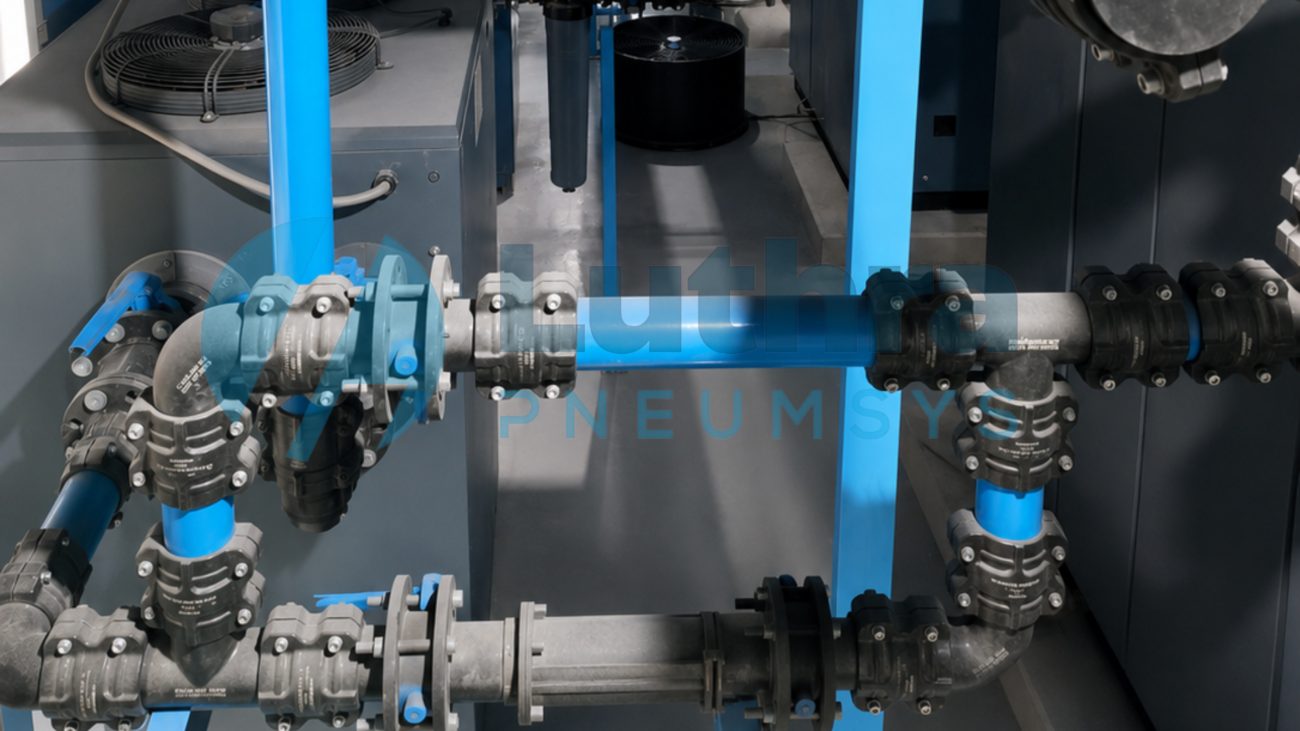
Aluminum compressed air piping is lightweight and can be easier to handle during installation. Modular push-fit systems can reduce the requirement for welding and specialized installation processes. This can help shorten installation periods and reduce production disruption, particularly when piping is being installed inside an operating manufacturing facility.
Over the lifetime of a compressed air system, maintenance and energy efficiency also influence total cost. Aluminum’s resistance to corrosion and its smooth internal surface can support reliable airflow and reduce problems associated with internal rust and scaling. The actual return on investment will depend on pipe diameter, network length, pressure, airflow demand, fittings, installation conditions and plant operating hours.
Performance: Aluminum vs Steel Air Piping
Compressed air piping performance depends on several factors, including pipe diameter, network configuration, connection quality, pressure requirements and internal pipe characteristics. A properly designed system should deliver adequate airflow to equipment while minimizing unnecessary pressure loss between the compressor and points of use.
Steel pipes can develop internal corrosion over time, particularly when moisture management is inadequate. Rust and internal scaling can affect the effective flow area and may contribute to maintenance issues. In compressed air applications where clean and consistent air delivery is important, controlling internal contamination becomes an important consideration.
The smooth internal bore associated with aluminum compressed air piping can help reduce friction within the distribution network. Aluminum also does not rust in the same manner as conventional steel piping, making it attractive for industrial environments where humidity and moisture are concerns. Correct sizing and network design remain essential regardless of the selected pipe material.
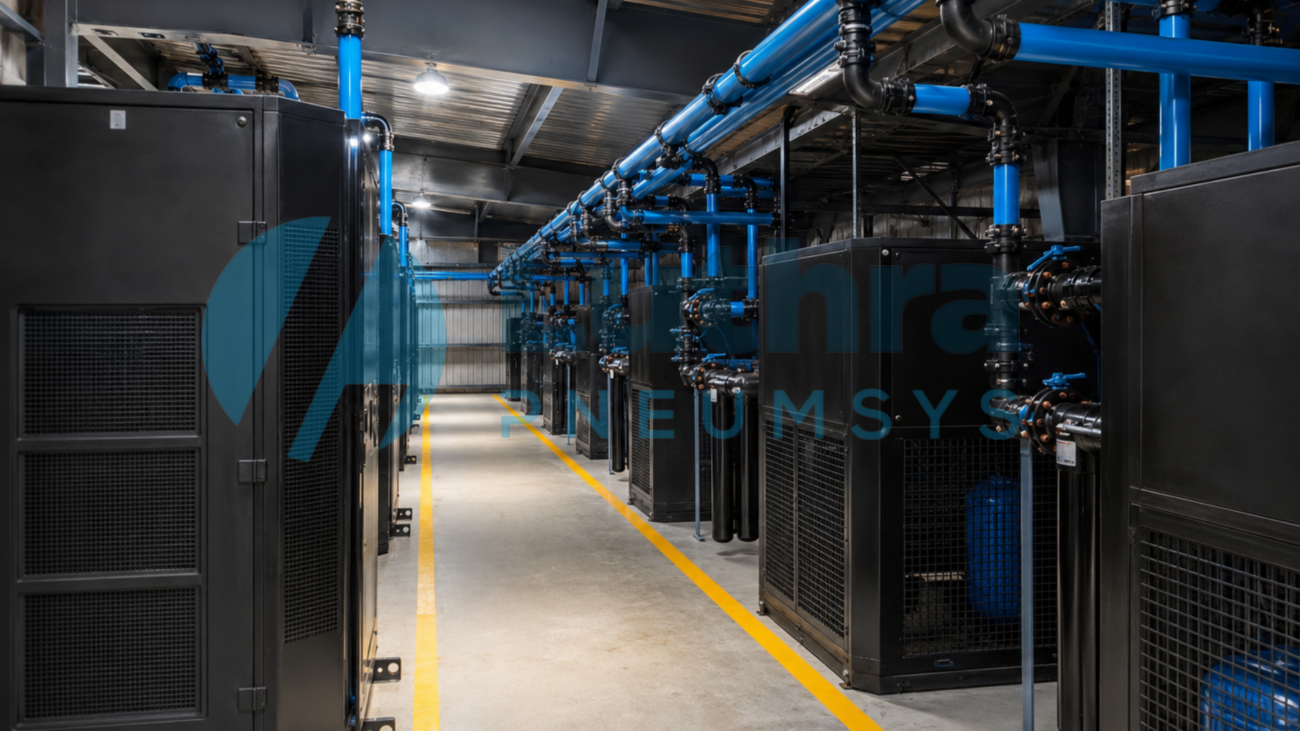
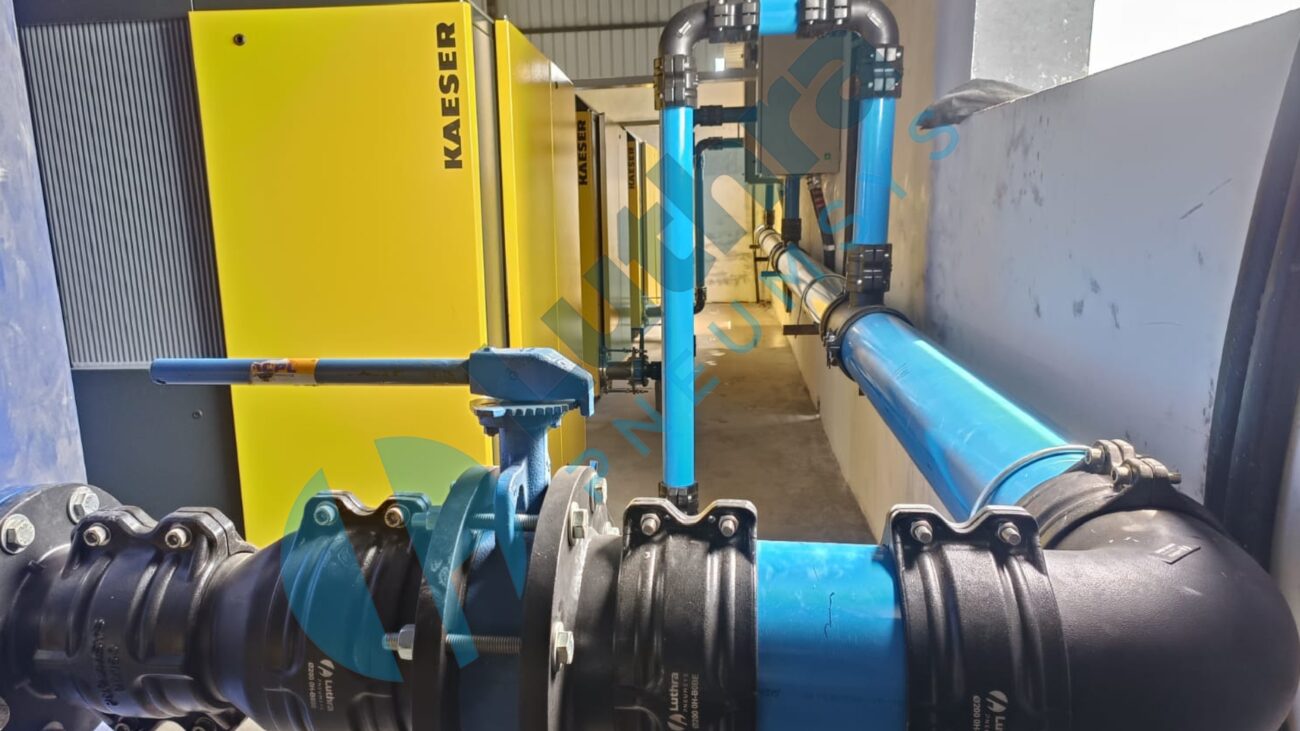
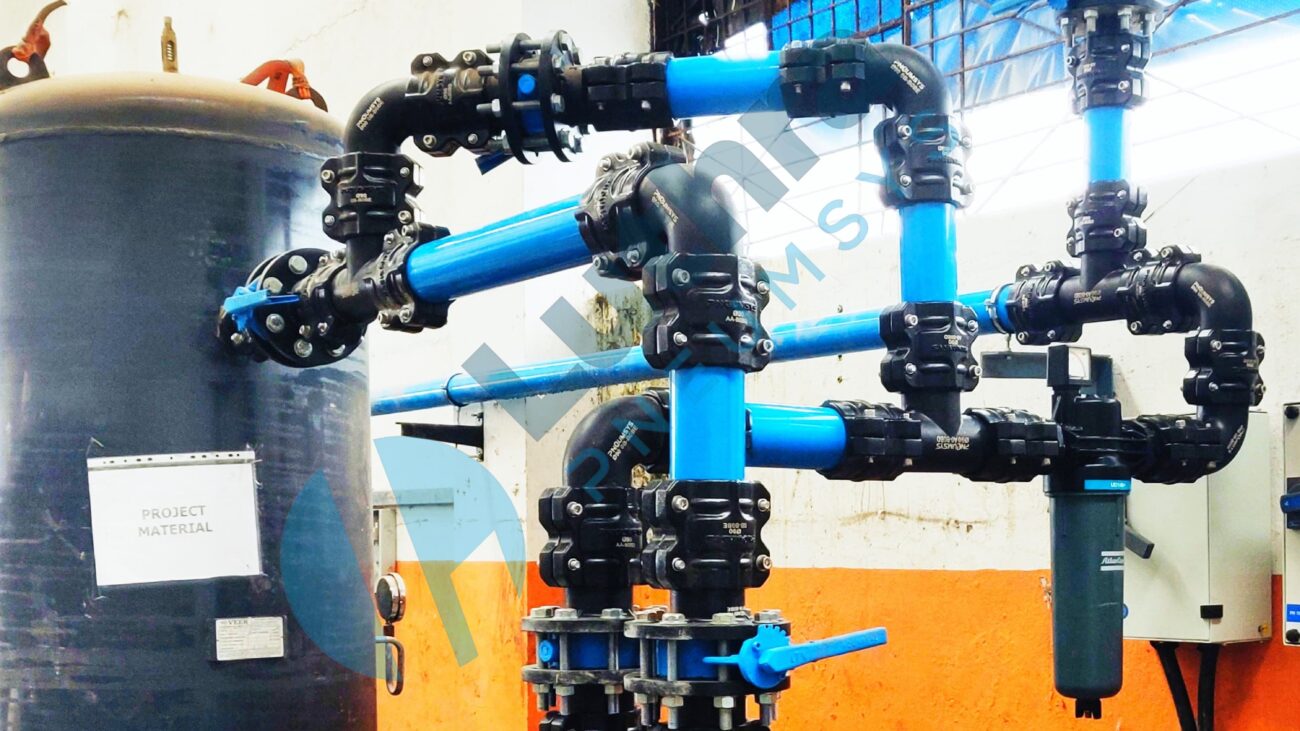
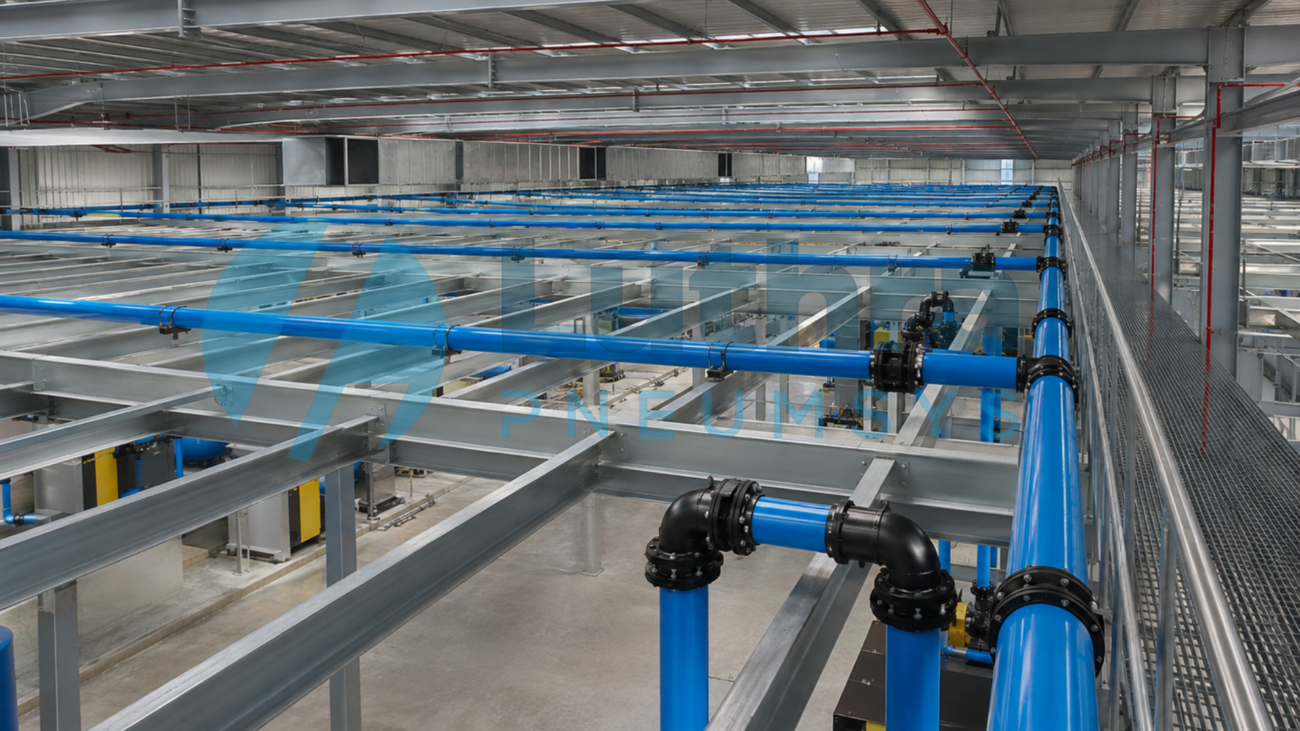
A well-designed aluminum network can therefore support stable compressed air distribution while providing flexibility for future modifications. Luthra Pneumsys describes its aluminum systems as modular solutions designed for industrial compressed air distribution, with fittings that support installation and system rearrangement.
Installation and Maintenance Differences
Installation is one of the most important differences between aluminum and conventional steel compressed air piping. Steel systems can require several fabrication steps before individual sections are ready for installation. Depending on the connection method, contractors may need threading or welding equipment and skilled personnel.
With modular aluminum systems, pipes can be cut to the required length and connected using compatible fittings. Push-fit technology can make installation faster and can reduce the need for welding. This approach can be useful when businesses need to minimize production downtime during a compressed air pipeline upgrade.
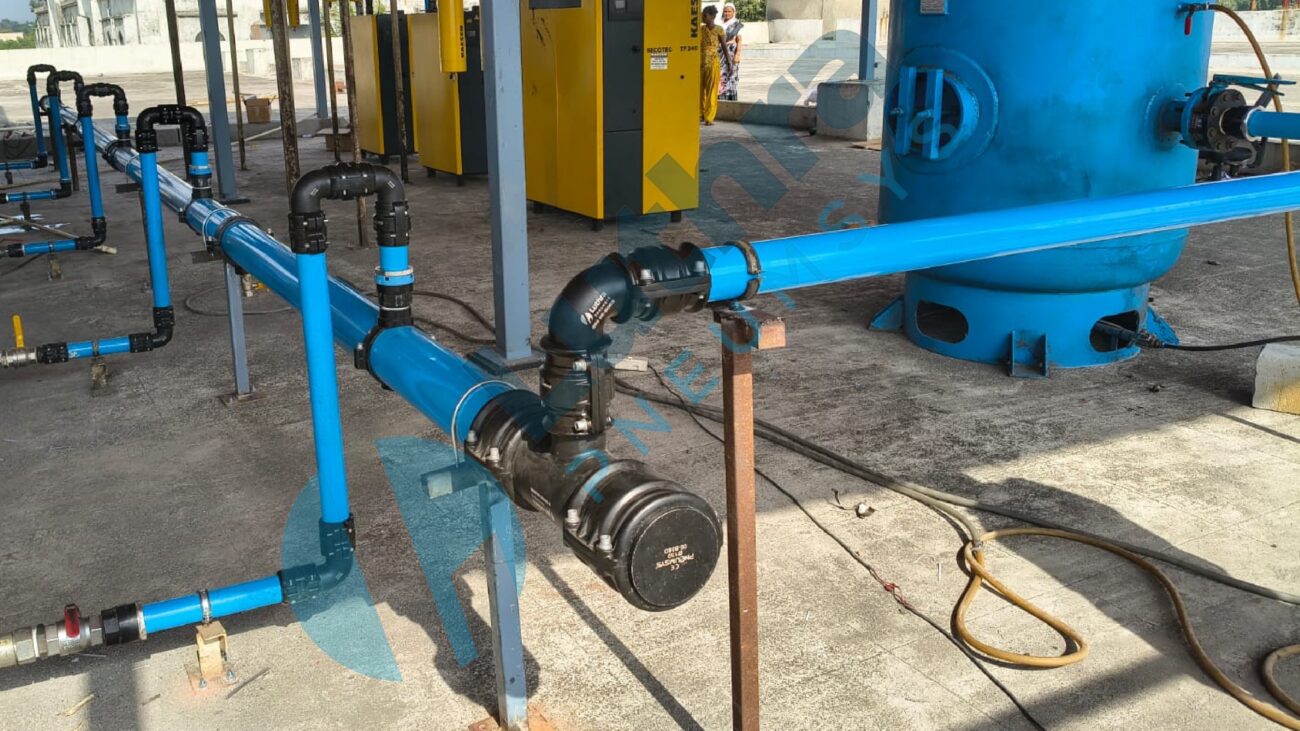
Maintenance and future expansion should also be considered during the original design stage. Manufacturing facilities frequently add machines, relocate production lines or expand operating areas. A modular aluminum compressed air piping network can be easier to modify because sections can be disconnected, extended or rearranged using compatible components.
Steel networks can also be modified, but modifications may involve additional fabrication and installation work. The practical maintenance cost will depend on the condition of the existing network, accessibility, connection type and plant requirements. For facilities expecting frequent layout changes, modularity can therefore become an important consideration alongside material strength.
Aluminum vs Steel Compressed Air Piping Comparison
| Comparison Factor | Aluminum Compressed Air Piping | Steel Compressed Air Piping |
|---|---|---|
| Material Weight | Lightweight and easier to handle | Heavier and more difficult to handle |
| Corrosion Resistance | High resistance to corrosion | Can be vulnerable to internal corrosion |
| Installation | Modular installation can be quick | May require more fabrication work |
| Welding Requirement | Push-fit systems can avoid welding | Welding may be required depending on design |
| Internal Surface | Smooth internal bore | Can develop internal scaling over time |
| Maintenance | Generally low maintenance | Corrosion-related maintenance may be required |
| Expansion | Easy to modify with modular fittings | Modifications can require fabrication |
| Installation Downtime | Potentially lower | Can be higher depending on installation method |
| Long-Term Flexibility | Suitable for changing layouts | More traditional fixed installation |
| Industrial Applications | Manufacturing, automation and process air | Heavy-duty industrial installations |
Which Piping Material Should Indian Industries Consider?
There is no single piping material suitable for every compressed air application. The right selection depends on operating pressure, airflow requirements, pipe dimensions, installation environment, budget and future expansion plans. Steel may remain appropriate for applications where its mechanical characteristics and existing infrastructure are important considerations.
For facilities prioritizing lightweight construction, corrosion resistance, faster installation and modular expansion, aluminum compressed air piping can be a practical option. It is particularly relevant for modern factories where compressed air networks need to adapt to changing production requirements.
Before selecting a system, businesses should evaluate the complete project rather than comparing only the purchase price of pipes. Installation labor, fittings, pressure drop, maintenance requirements, downtime and future modifications can all influence the actual cost of ownership.
For new industrial projects and compressed air network upgrades in India, professional system design is also important. Correct pipe sizing, appropriate routing, properly selected fittings and adequate drainage can help the system operate efficiently and reliably throughout its service life.
Why Aluminum Compressed Air Piping Is Suitable for Modern Facilities?
Modern manufacturing facilities increasingly require compressed air systems that are efficient, reliable and adaptable. Aluminum compressed air piping combines lightweight construction with corrosion resistance and modular connection options, making it suitable for many industrial environments.
Its installation flexibility can be particularly valuable during plant expansions and equipment relocations. Instead of treating a compressed air network as a permanently fixed infrastructure, modular piping allows the system to evolve as production requirements change.
Aluminum pipework can also help maintain a clean distribution pathway because it does not develop conventional rust inside the pipe in the same way as steel. This characteristic can be valuable for industries where compressed air quality and consistent equipment performance are important.
When combined with proper filtration, drying, drainage and system design, an aluminum compressed air network can provide a reliable distribution solution for factories, workshops and production facilities across India.
Conclusion
The comparison between aluminum and steel compressed air piping should extend beyond initial material price. Installation requirements, corrosion resistance, maintenance, airflow performance, production downtime and future expansion can all affect the long-term value of a compressed air network.
For Indian industries looking for a lightweight, corrosion-resistant and modular distribution solution, aluminum compressed air piping offers several practical advantages. Its flexible installation approach can support new installations, plant upgrades and future network expansion.
A successful compressed air piping project ultimately depends on selecting the right material and combining it with correct sizing, efficient routing, quality fittings and professional installation. By evaluating both immediate project requirements and long-term operating needs, industrial facilities can develop a compressed air distribution system designed for reliable performance.
FAQs About Aluminum Compressed Air Piping
Is aluminum compressed air piping better than steel?
The appropriate choice depends on the application. Aluminum offers corrosion resistance, lightweight handling and modular installation, while steel offers traditional industrial construction and mechanical strength. System pressure, environment, budget and future expansion should all be considered.
Is aluminum piping suitable for industrial compressed air?
Yes. Aluminum piping systems are used for industrial compressed air distribution across applications such as manufacturing, automation, automotive, pharmaceuticals, food processing and other production environments.
Does aluminum compressed air piping reduce installation time?
Modular aluminum systems can simplify installation because compatible push-fit fittings can reduce the need for welding and extensive fabrication. Actual installation time depends on the pipe network, facility layout and project size.
Does aluminum compressed air piping rust?
Aluminum does not rust in the same way as conventional steel. Its corrosion resistance makes it suitable for environments where moisture and corrosion are concerns.
Can aluminum compressed air piping be expanded later?
Yes. Modular aluminum systems can be designed to allow additional pipe sections, drops and fittings to be incorporated when production areas are expanded or equipment layouts change.
Is aluminum piping suitable for Indian industries?
Yes. Its corrosion resistance, lightweight construction and modular installation characteristics make it suitable for many industrial environments across India. Proper pipe sizing and system design are still essential.
What is more important than pipe material when designing a compressed air system?
Pipe diameter, network layout, airflow demand, operating pressure, fittings, filtration, moisture management and pressure-drop control are all important. A high-quality pipe material cannot compensate for an incorrectly designed distribution system.