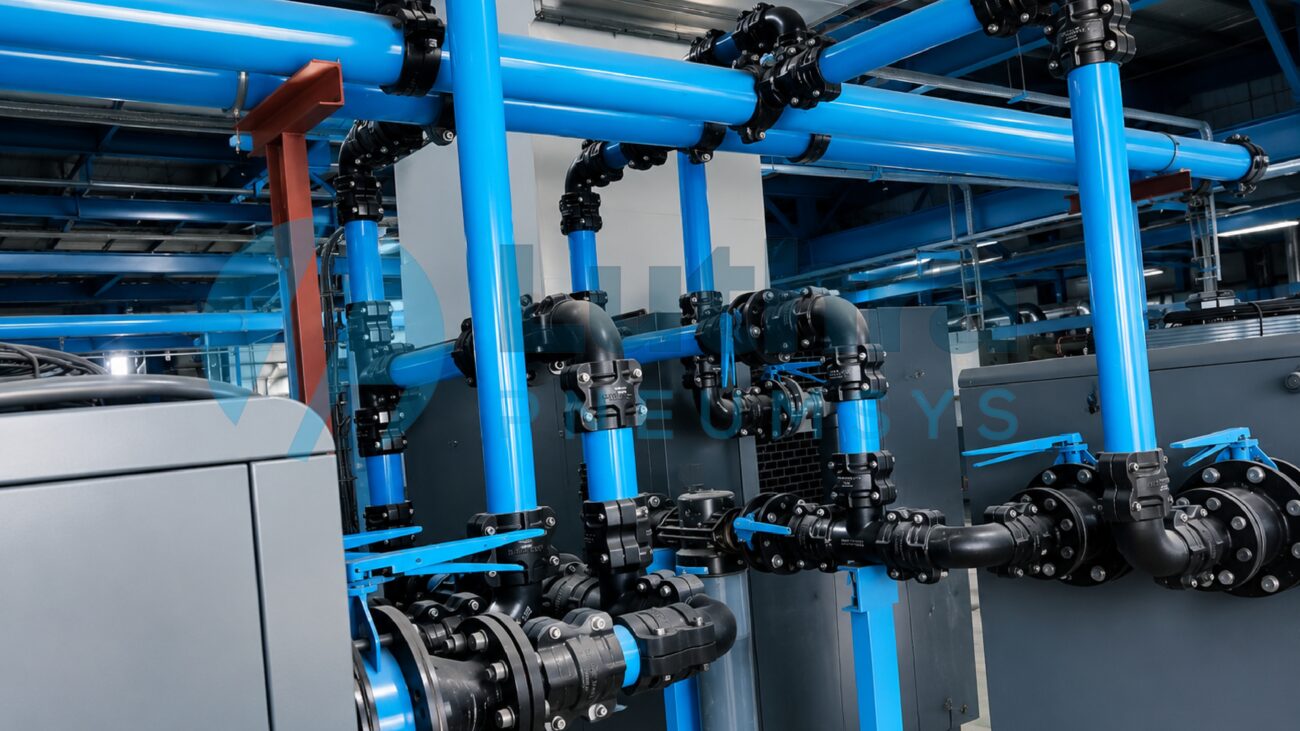
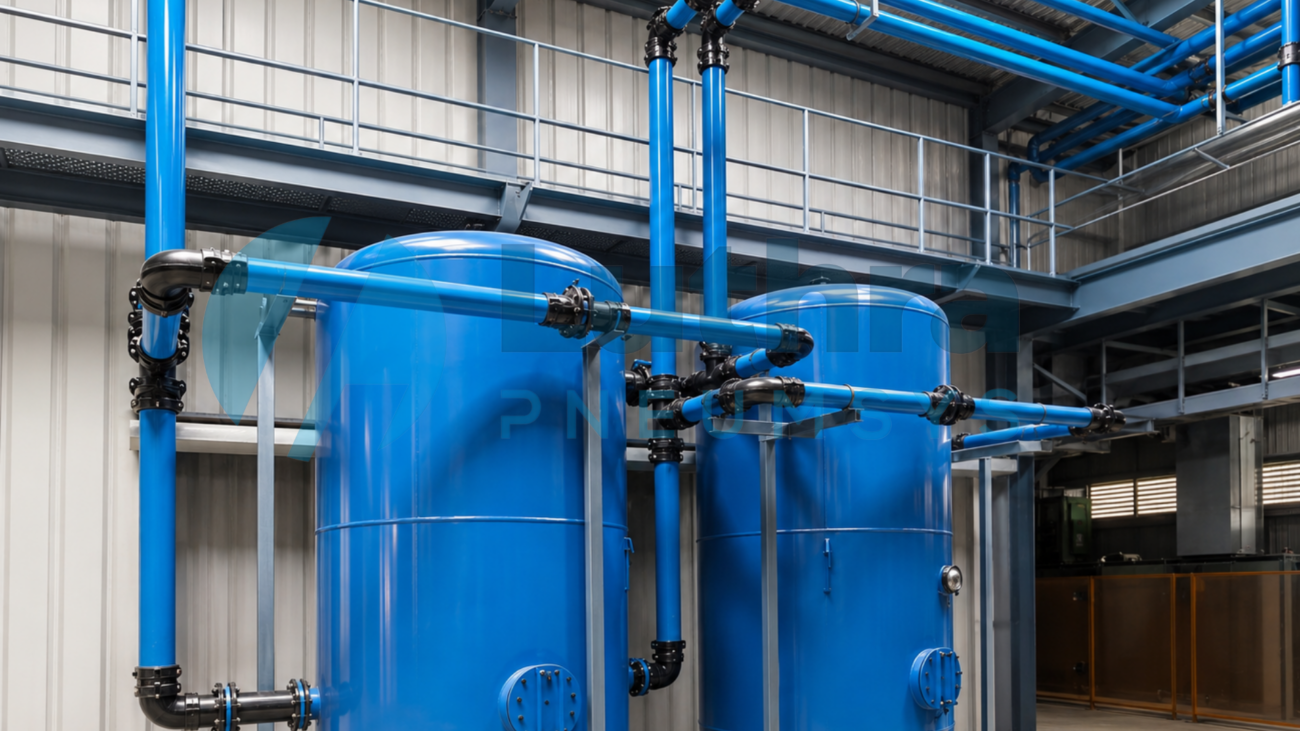
Air Compressor Pipeline Installation: A Complete Overview
An efficient compressed air network is essential for factories, workshops, manufacturing units and process industries that depend on pneumatic equipment. The compressor generates compressed air, but the pipeline network determines how effectively that air reaches machines and production points. A professionally planned air compressor pipeline installation can help maintain stable pressure, reduce unnecessary energy losses and improve the reliability of pneumatic operations.
The installation process involves much more than connecting pipes to an air compressor. It includes understanding air demand, selecting suitable pipe materials, calculating pipe diameter, planning the pipeline route, managing condensate, installing valves and fittings, testing the network and finally commissioning the system. Every stage needs to be considered carefully to create a dependable compressed air distribution network.
According to the Bureau of Energy Efficiency, ring-main layouts can help minimize pressure losses, while proper pipe sizing, drainage, suitable materials and reduced bends are important considerations for compressed air distribution systems.
For industrial facilities in India, air compressor pipeline installation should also account for present production requirements as well as future expansion. A pipeline designed only for today’s demand may become restrictive when additional machines or compressors are introduced. Proper planning at the beginning can reduce expensive modifications later.
Design and Planning of an Air Compressor Pipeline
The first stage of air compressor pipeline installation is system design. Engineers need to identify the number of compressed air consumers, their operating pressure, air consumption, operating schedules and locations. The compressor capacity, receiver size, dryer requirements and expected future demand should also be considered before finalizing the pipeline arrangement.
Pipe sizing is particularly important because an undersized pipeline can create excessive pressure drop and restrict airflow. The design should consider the compressor’s Free Air Delivery, total pipeline length, fittings, valves, bends, operating pressure and future capacity. Properly dimensioned distribution networks help maintain pressure at the most distant points of use.
A ring-main arrangement can be useful for larger industrial facilities because compressed air can reach consumption points from more than one direction. This can provide more uniform distribution when demand changes across different production areas. Branch lines can then be connected from the main loop to individual machines and workstations.
The design should also include provisions for condensate drainage, isolation valves, service connections and future extensions. The Bureau of Energy Efficiency recommends suitable slope and drainage arrangements for compressed air mains, while also advising against unnecessary bends and turns that can increase pressure losses.
Choosing the Right Piping Material and Diameter
Selecting an appropriate pipe material is an important part of air compressor pipeline installation. The choice depends on operating pressure, temperature, environment, required air quality, installation conditions, maintenance requirements and project budget. Common industrial solutions can include metallic and purpose-designed compressed air piping systems.
Smooth internal pipe surfaces can help reduce resistance to airflow. Pipe diameter should not be selected simply by matching the compressor outlet connection. Instead, the complete distribution network should be evaluated according to flow requirements and acceptable pressure loss.
| Design Factor | Why It Matters |
|---|---|
| Air consumption | Determines required flow capacity |
| Pipe diameter | Influences pressure drop and airflow |
| Pipeline length | Longer routes increase resistance |
| Number of fittings | Bends and restrictions add pressure loss |
| Operating pressure | Determines system performance requirements |
| Future expansion | Prevents premature pipeline replacement |
| Condensate management | Protects downstream equipment |
| Pipe material | Influences durability and maintenance |
Proper sizing becomes increasingly important as the network becomes larger. Industry guidance notes that pressure losses occur because of pipe friction, valves, fittings and changes in flow direction. Atlas Copco
Installation of the Main Air Pipeline
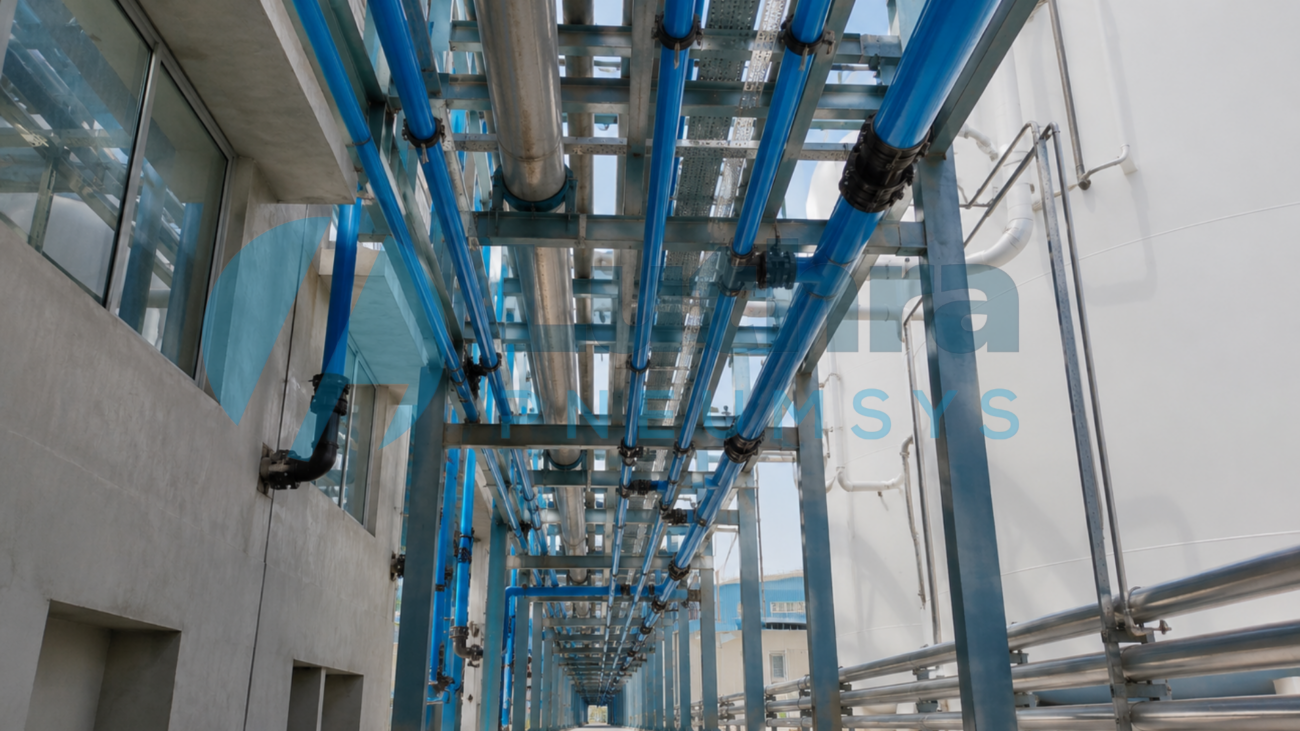
Once the design and material selection are complete, the physical installation can begin. The main header should be routed through an accessible and practical path that avoids unnecessary bends and restrictions. Overhead installation is commonly considered where appropriate because it can provide convenient access for maintenance and connections.
The pipeline needs adequate supports and brackets to prevent sagging and unwanted mechanical stress. Support arrangements should follow the requirements of the selected piping system and installation conditions. Poorly supported pipes can place additional loads on joints and connections, increasing the possibility of leakage or mechanical damage.
Condensate is another important consideration. As compressed air cools, moisture can accumulate inside the distribution system. The main pipeline should therefore be arranged with appropriate slope and low-point drainage. The Bureau of Energy Efficiency recommends a minimum slope of 1 inch per 10 feet for the main header and drainage points at suitable intervals.
Branch connections should be carefully positioned to reduce the possibility of condensate entering downstream equipment. Guidance from BEE recommends taking branch connections from the top of the main pipeline, while suitable drain traps and strainers should be provided where required.
Connecting Branch Lines and Point-of-Use Equipment
After the main header has been installed, branch pipelines are connected to individual production areas. Each branch should be sized according to the expected demand of the connected equipment rather than using one uniform size throughout the plant.
Point-of-use connections may include isolation valves, filters, regulators, hoses, quick couplings and other accessories. These components should have adequate flow capacity so that the pressure available at the machine remains suitable during operation.
The routing of service lines should also be planned to minimize unnecessary hose lengths and restrictive fittings. A well-designed network separates the main distribution system from service connections, making maintenance and future modifications easier.
For larger facilities, isolation valves can divide the network into sections. This allows maintenance teams to isolate a particular production area without necessarily shutting down the complete compressed air distribution system. A properly designed system therefore supports both operational reliability and easier maintenance.
Air Treatment, Moisture Control and Drainage
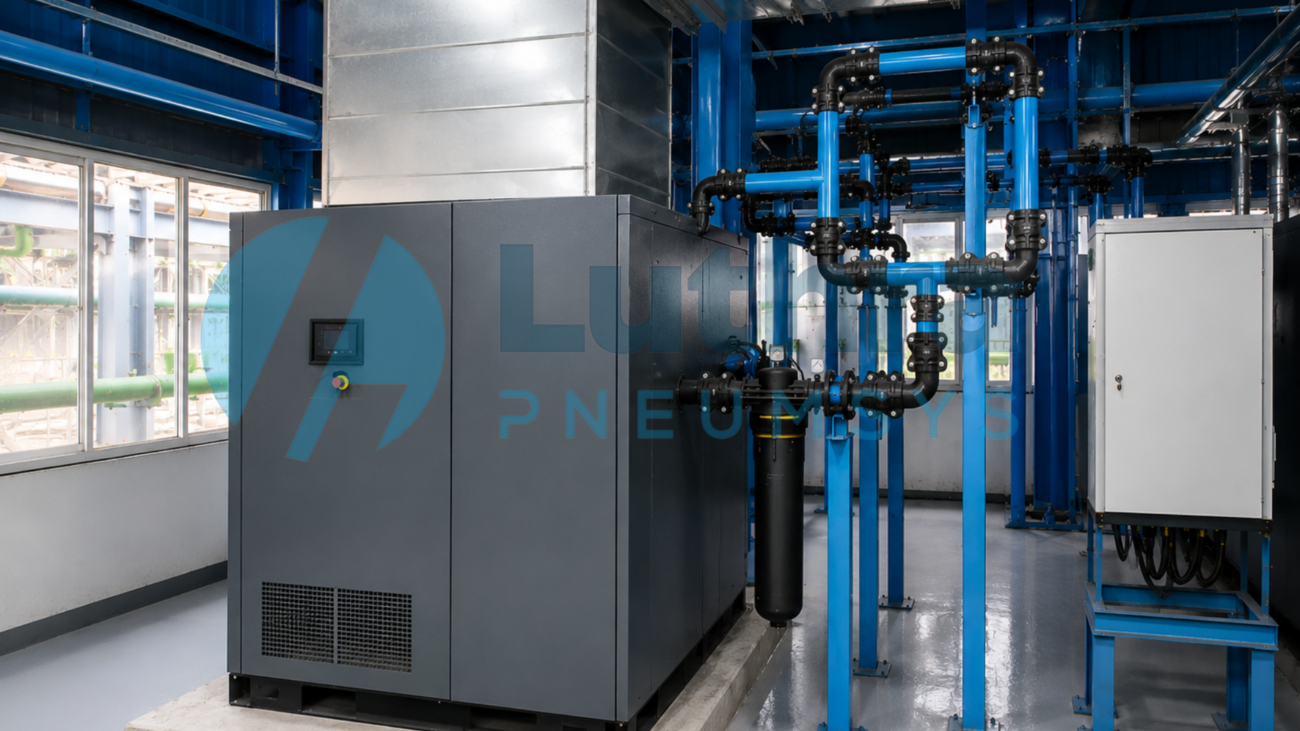
Compressed air treatment should be considered as part of the complete pipeline system. Depending on the application, the system may require an aftercooler, moisture separator, air dryer, filters and automatic drains. Instrumentation and other applications requiring dry air may require additional treatment before the air reaches the point of use.
Moisture that remains uncontrolled can affect pneumatic tools, valves, cylinders and other downstream equipment. Condensate management should therefore be incorporated into the pipeline design rather than treated as an afterthought.
BEE guidance recommends moisture separators where required and appropriate drainage arrangements throughout the receiver, main and branch lines.
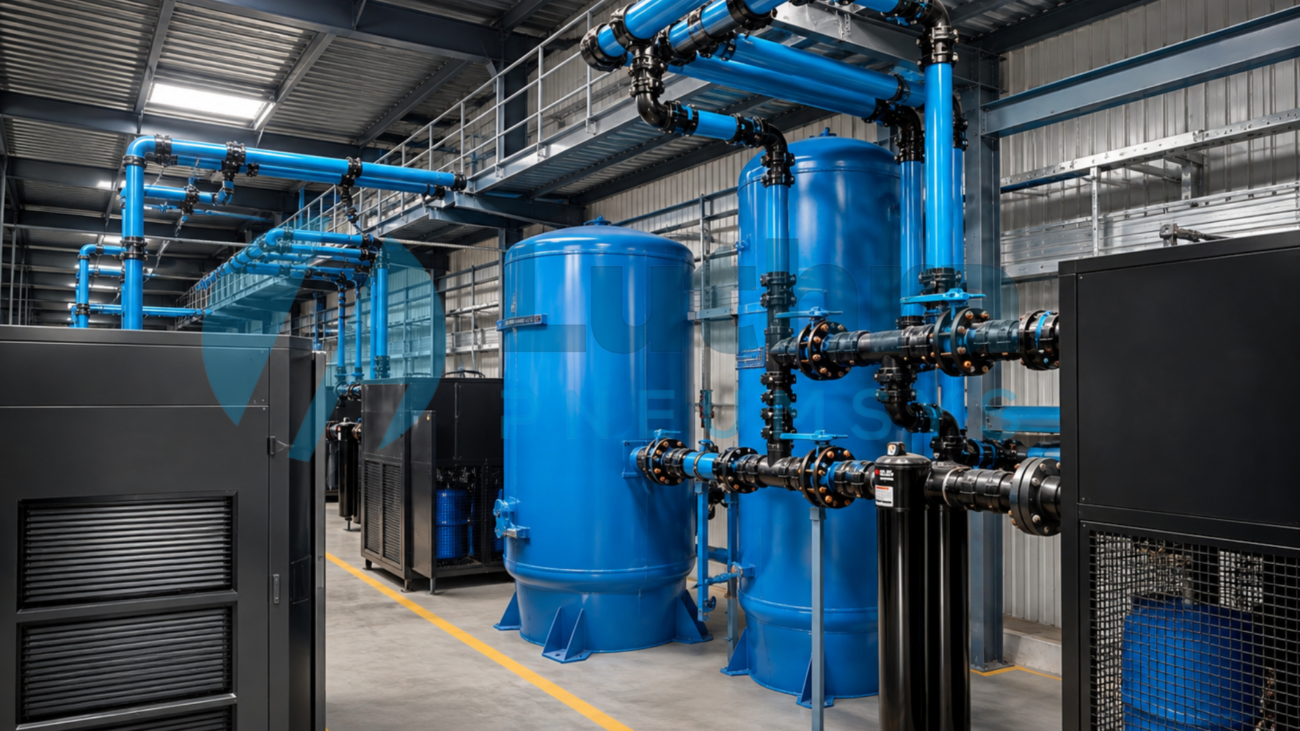
The air receiver also plays an important role in a compressed air system. It provides storage capacity, helps manage fluctuating demand and supports condensate separation. The required receiver arrangement should be selected according to compressor capacity and the operating pattern of the connected equipment.
Testing and Commissioning the Pipeline
Testing is one of the most important stages of air compressor pipeline installation. Before the system is placed into normal operation, the completed network should be inspected for alignment, supports, connections, valves, drains and visible installation defects.
The pipeline should undergo an appropriate leak and pressure testing procedure based on the applicable project specifications, piping material and safety requirements. Every joint, valve, fitting and connection should be checked carefully before the system is handed over for production use.
Commissioning should also verify pressure at important points throughout the network. The compressor outlet pressure may look satisfactory while excessive losses elsewhere in the system result in insufficient pressure at a distant machine. Measuring critical points helps identify such issues before full-scale production begins.
The final commissioning process should confirm that valves operate correctly, drains function as intended, air treatment equipment performs properly and the network delivers compressed air to all designated consumption points. Indian engineering specifications for compressed air pipelines similarly cover supply, erection, testing and commissioning as parts of the complete system.
Why Professional Air Compressor Pipeline Installation Matters?
A compressed air pipeline is a long-term industrial asset. Poor design or installation can result in pressure fluctuations, leakage, moisture problems, increased compressor loading and unnecessary operating costs. In contrast, a correctly engineered network can provide consistent airflow and make future maintenance and expansion more manageable.
Professional air compressor pipeline installation considers the entire system rather than focusing only on the pipe itself. Compressor capacity, air treatment, receiver location, pipe sizing, layout, fittings, drainage, supports and point-of-use requirements all work together.
For Indian manufacturing and industrial facilities, Luthra Pneumsys provides solutions for compressed air piping and pipeline installation requirements. You can explore the company’s dedicated air compressor pipeline installation service to understand the available approach for your project.
Conclusion
A successful air compressor pipeline installation starts with accurate system design and continues through pipe selection, sizing, routing, condensate management, installation, testing and commissioning. Every component has a role in ensuring compressed air reaches production equipment with appropriate pressure, quality and reliability.
For industrial applications, investing in a properly engineered compressed air network can support dependable pneumatic operation while reducing avoidable pressure losses and maintenance challenges. With systematic planning and professional installation, businesses can create a scalable pipeline infrastructure capable of supporting both current requirements and future production growth.
Frequently Asked Questions
What is air compressor pipeline installation?
Air compressor pipeline installation is the process of designing, supplying, assembling and commissioning a compressed air distribution network that carries air from the compressor and treatment equipment to different points of use.
How do I select the correct pipe size?
Pipe size should be calculated according to airflow demand, pipeline length, operating pressure, fittings, acceptable pressure drop and future expansion requirements. Simply matching the compressor outlet size may not provide an optimized distribution system.
Is a ring-main pipeline suitable for industrial facilities?
A ring-main layout can be particularly useful for larger facilities because compressed air can reach consumption points from multiple directions. BEE guidance identifies ring-main headers as a way to minimize pressure losses in distribution networks.
Why is pipeline slope important?
Pipeline slope helps condensate move toward designated drainage points rather than accumulating inside the distribution line. Proper drainage helps protect downstream pneumatic equipment.
Why does an air compressor pipeline lose pressure?
Pressure loss can result from friction inside the pipe, undersized piping, excessive pipeline length, restrictive fittings, valves, bends and poorly designed connections. Proper pipe sizing and layout can help minimize these losses.
Why is commissioning necessary?
Commissioning confirms that the installed pipeline is properly connected, adequately supported, sufficiently leak-tight and capable of delivering the required pressure and airflow to the intended consumption points.
How can I plan for future expansion?
Future equipment demand should be considered during the initial design. Selecting suitable main-pipe capacity and planning additional connection points can reduce the need for major modifications when production expands.