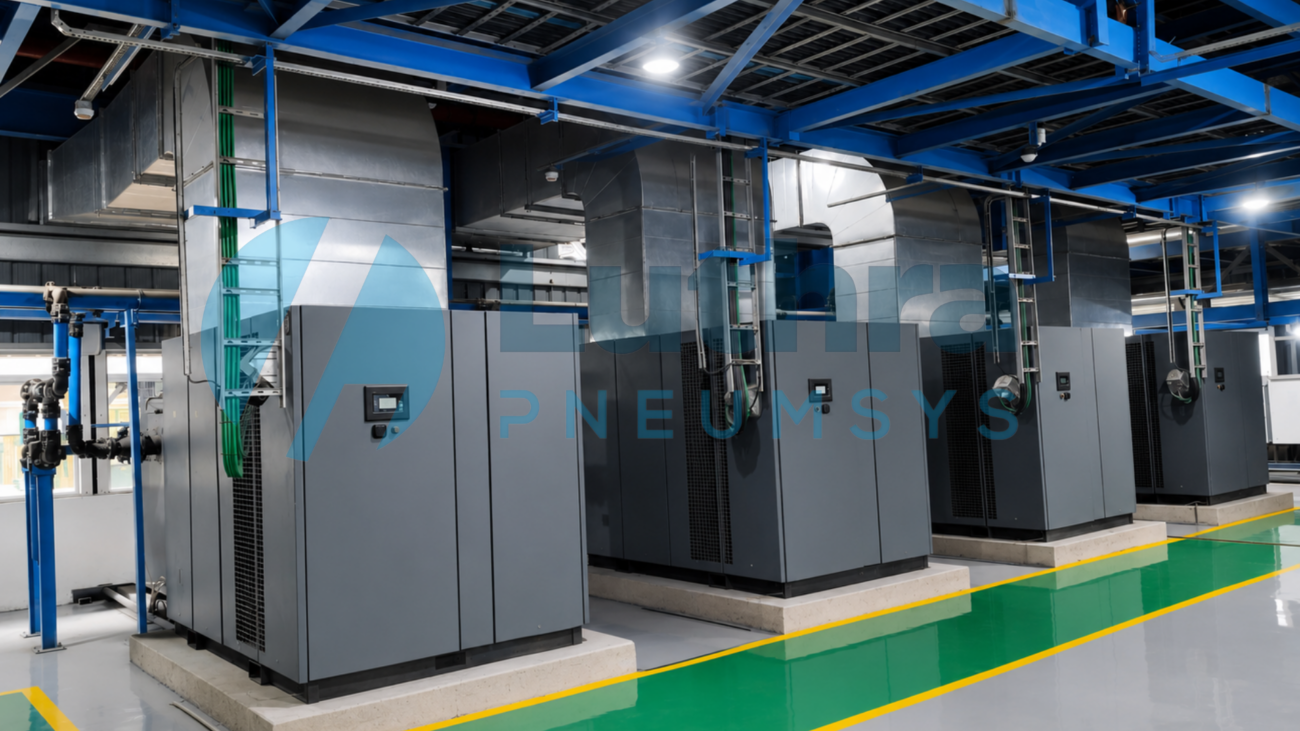
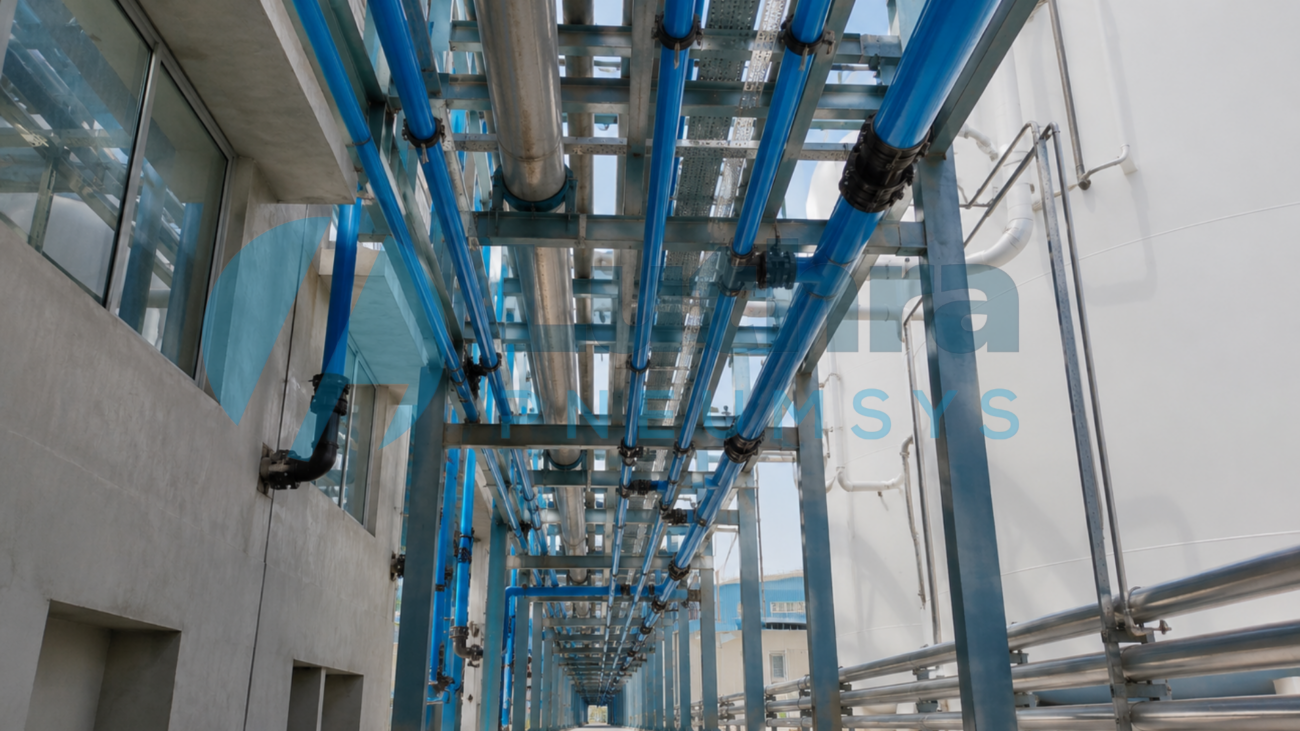
A reliable compressed air piping network is essential for factories, workshops, manufacturing units, automobile plants, pharmaceutical facilities, engineering industries, and commercial production environments across India. While much attention is given to selecting the right compressor, the piping network is equally important because it carries compressed air from the compressor room to machines, pneumatic tools, cylinders, actuators, and other points of use.
A poorly designed compressed air piping system can create pressure drops, air leakage, uneven airflow, moisture-related problems, and unnecessary operating costs. On the other hand, a correctly designed piping network can provide stable air pressure, efficient distribution, cleaner airflow, and greater flexibility for future expansion.
Modern industrial facilities are increasingly considering aluminium piping systems because they are lightweight, corrosion-resistant, easy to install, and suitable for modular modifications. The right piping material and layout should always be selected according to operating pressure, airflow requirements, pipe length, number of outlets, plant layout, and future production requirements.
What Is a Compressed Air Piping System?
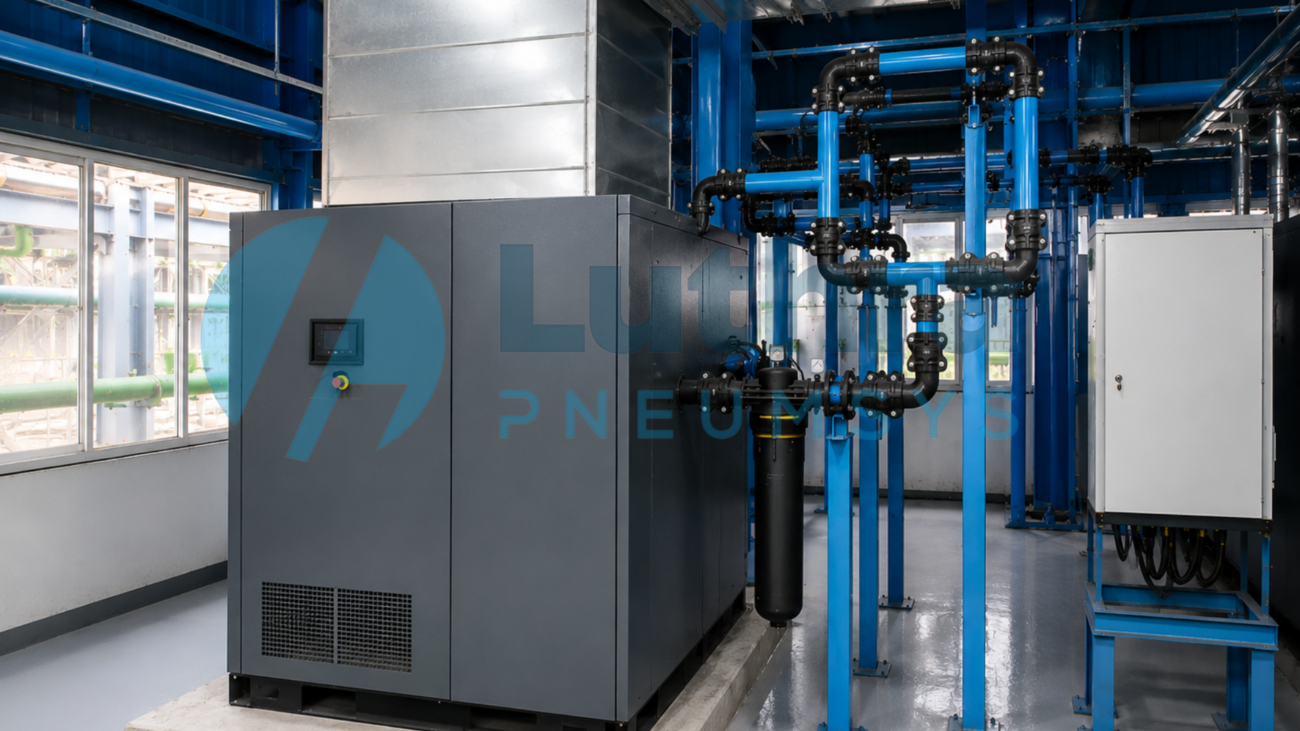
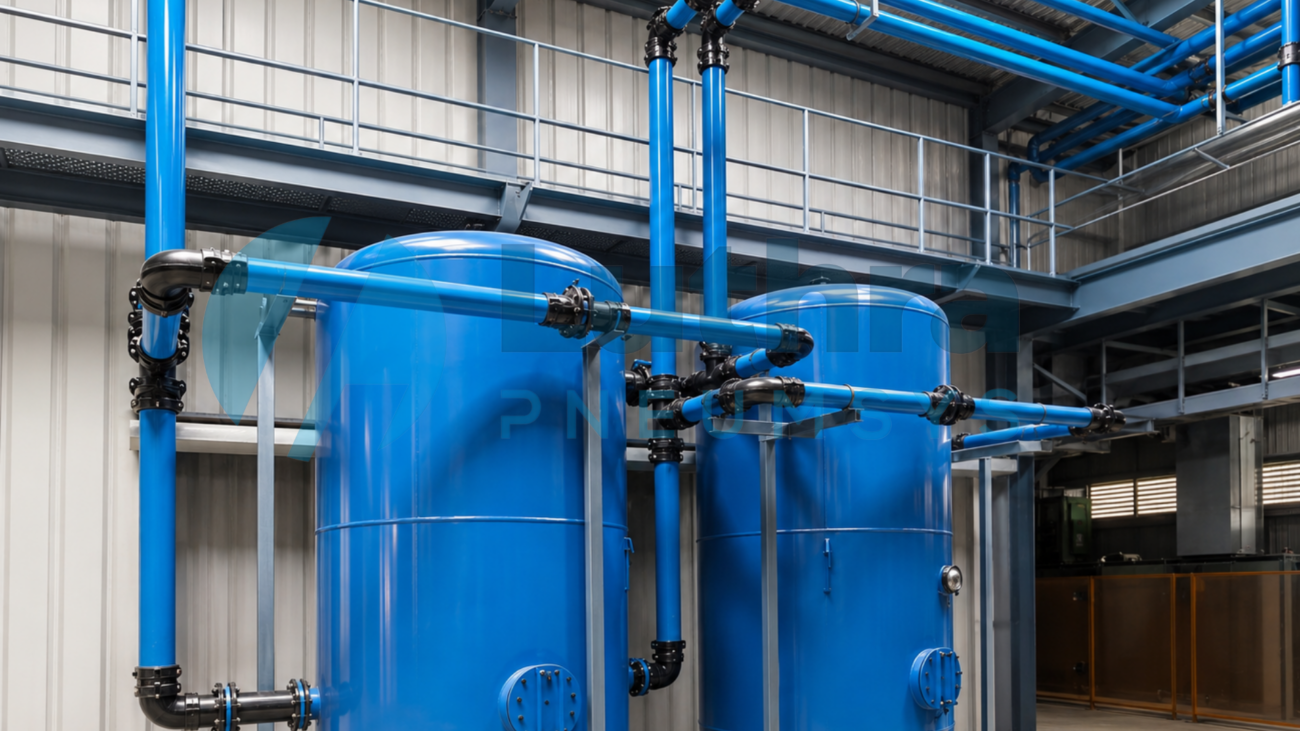
A compressed air piping system is the distribution network used to transport compressed air from the compressor and air treatment equipment to different consumption points. A complete system can include main headers, ring mains, branch lines, drop pipes, isolation valves, drains, fittings, supports, and point-of-use connections.
The purpose of the network is not simply to move air from one location to another. It should deliver the required volume of air at an appropriate pressure while controlling pressure losses and minimizing leakage. Pipe diameter, routing, fittings, bends, connection quality, and overall plant design can all affect system performance.
For Indian industries, aluminium piping is an increasingly practical option for modern installations. Aluminium pipes provide a smooth internal surface and are resistant to corrosion, making them suitable for applications where reliable and clean compressed air distribution is important.
A properly planned network can also make future expansion easier. When production lines change or new machines are added, a modular compressed air piping system can be modified with less disruption than many conventional piping arrangements.
How Is Compressed Air Piping Installed?
The installation of a compressed air piping system begins with understanding the factory layout, compressor capacity, operating pressure, air demand, machine locations, and future expansion plans. A detailed layout helps determine the main header route, branch connections, pipe diameters, drop locations, isolation points, and drainage requirements.
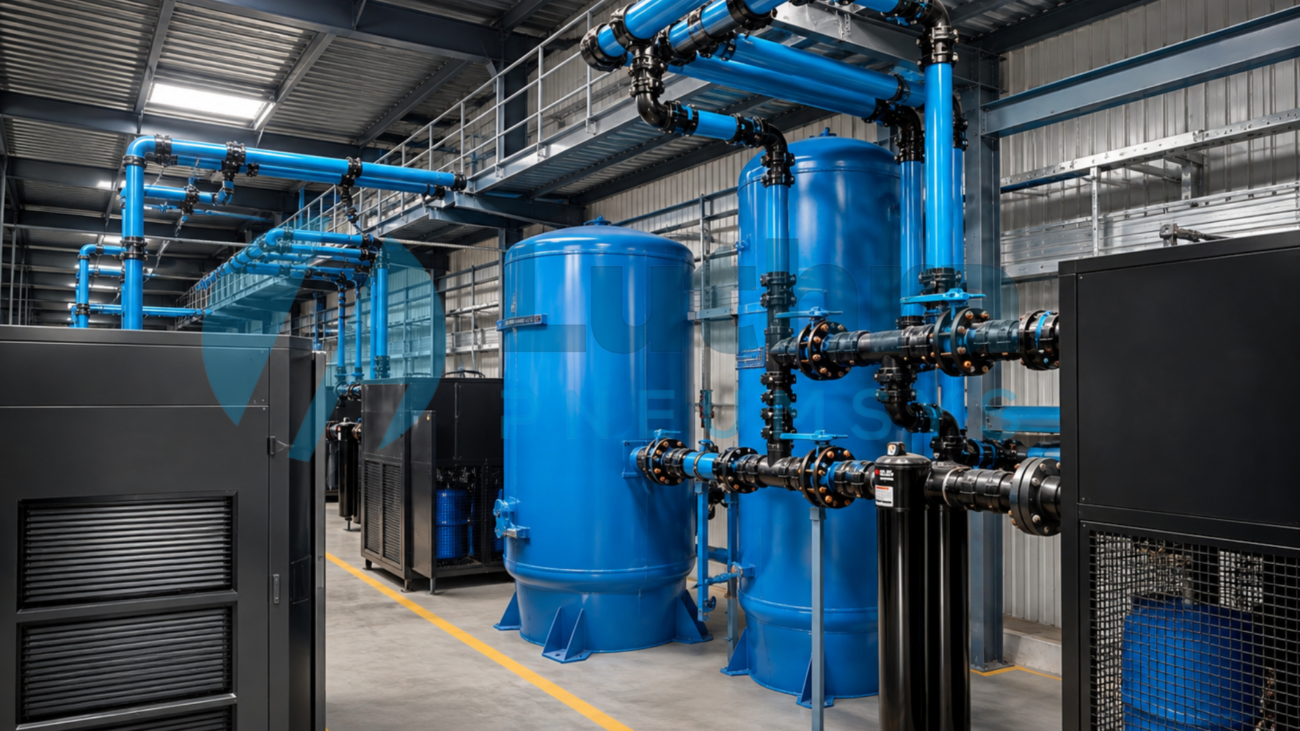
Ring-main arrangements are commonly considered for larger industrial facilities because compressed air can reach consumption points from multiple directions. Branch lines can then be connected to individual production areas or machine groups. Proper routing should avoid unnecessary bends and excessive pipe lengths because these can increase resistance and pressure losses.
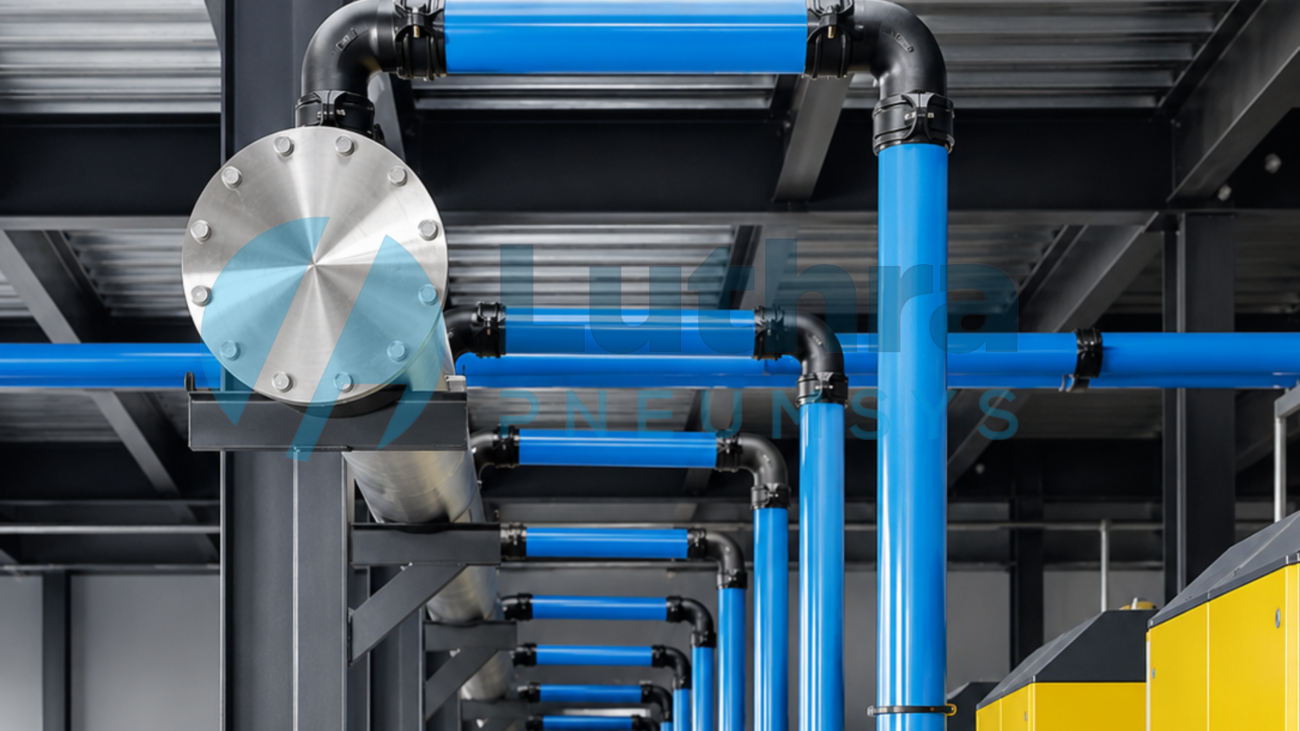
Aluminium modular piping can simplify installation because sections can be assembled using suitable fittings without extensive welding or threading. This can reduce installation complexity and make modifications easier when machines are relocated or production areas are expanded.
After installation, the network should be inspected and tested before being placed into regular operation. Connections, valves, supports, outlets, and joints should be checked carefully. Testing helps identify installation problems and provides greater confidence that the system can operate reliably under the required working conditions.
Compressed Air Piping Cost in India
The cost of compressed air piping in India varies from project to project. There is no single price that applies to every factory because the final investment depends on pipe material, diameter, total pipeline length, number of machine drops, fittings, valves, supports, installation height, labour, accessibility, and site requirements.
For this reason, calculating the cost only on a per-metre basis may not provide an accurate project budget. A complete quotation should consider the entire distribution network, including fittings, branches, valves, supports, installation work, testing, and other required components.
The following table provides a general cost-planning framework rather than a fixed quotation:
| Cost Factor | Impact on Project Cost | Why It Matters |
|---|---|---|
| Pipe Material | High | Aluminium, GI and other materials have different purchase and installation costs |
| Pipe Diameter | High | Larger diameters require more material and suitable fittings |
| Pipeline Length | High | Longer networks require more pipe, supports and installation work |
| Number of Drops | Medium to High | Each machine connection requires additional components |
| Fittings & Valves | Medium | Elbows, tees, reducers and isolation valves add to the system cost |
| Installation Height | Medium to High | Elevated installations may require additional access equipment |
| Labour | Medium | Site conditions and installation complexity influence labour requirements |
| Testing & Commissioning | Medium | Proper testing helps verify system reliability before operation |
A project-specific quotation is therefore the most reliable way to determine the actual compressed air piping cost for an industrial facility.
Why Aluminium Compressed Air Piping Is a Practical Solution?
Aluminium is widely considered for modern compressed air piping because it combines relatively low weight with corrosion resistance and convenient installation. Compared with heavier traditional piping materials, aluminium can be easier to handle during installation and modification.
Another advantage is the smooth internal surface of aluminium piping. A clean, smooth pipe interior can support efficient airflow and reduce the risk of corrosion-related contamination associated with ageing metallic pipework.
Modular aluminium systems are also useful when a factory expects future expansion. New branches, outlets, or production areas can often be incorporated into an appropriately designed modular network without rebuilding the entire system.
For businesses planning a new installation or replacing an ageing pipeline, aluminium can therefore provide a practical balance between installation convenience, durability, maintenance requirements, and long-term usability.
Best Solutions for Industrial Compressed Air Distribution
Choosing the best compressed air piping solution starts with correct system design rather than simply selecting the cheapest pipe. The network should be sized according to compressor capacity, actual airflow demand, operating pressure, distance, and anticipated future requirements.
A ring-main layout can be considered for larger plants where multiple production areas require compressed air. Properly positioned isolation valves can allow individual sections to be serviced without unnecessarily affecting the complete network.
Machine drops should also be designed carefully. Moisture management, suitable filtration, drains, regulators, and point-of-use connections may be required depending on the application. Correct pipe supports and routing are equally important for maintaining a safe and organized installation.
Luthra Pneumsys provides compressed air piping solutions designed for industrial and commercial applications in India. The company offers aluminium piping systems intended to provide efficient compressed air distribution while supporting easier installation, modification, and expansion.
How to Reduce Compressed Air Piping Installation Costs?
Reducing the initial project cost should not mean choosing an undersized pipeline or compromising the quality of fittings. A better approach is to optimize the complete system before installation begins.
Accurate machine-location planning can prevent unnecessary pipe runs and future modifications. Correct pipe sizing can help avoid excessive pressure losses, while efficient routing can reduce the number of bends and fittings required.
Selecting a modular piping solution can also help control future modification costs. When production requirements change, a flexible system can make it easier to extend or rearrange the network instead of replacing large sections of the existing installation.
The most cost-effective compressed air piping system is therefore one that considers installation expenses as well as maintenance, energy efficiency, reliability, and future expansion.
Conclusion
A professionally designed compressed air piping system can play a major role in maintaining reliable compressed air distribution throughout an industrial facility. From correct pipe sizing and efficient routing to suitable materials and dependable fittings, every part of the network contributes to overall performance.
For Indian factories and businesses, aluminium piping can provide a practical solution where lightweight construction, corrosion resistance, easy installation, and future flexibility are important. Instead of focusing only on the initial purchase price, businesses should evaluate installation, maintenance, performance, and long-term expansion requirements.
If you are planning a new industrial air distribution network or upgrading an existing system, Luthra Pneumsys can help you explore a suitable compressed air piping solution based on your application and plant requirements.
FAQs About Compressed Air Piping
What is compressed air piping?
Compressed air piping is the network that distributes compressed air from a compressor and air treatment system to machines, pneumatic tools, cylinders, actuators, and other points of use.
Which material is suitable for compressed air piping?
Aluminium is a popular choice for modern industrial systems because it is lightweight, corrosion-resistant, and relatively easy to install and modify. Material selection should depend on pressure, application, environment, and project requirements.
How much does compressed air piping cost in India?
The cost depends on pipe diameter, material, pipeline length, fittings, valves, machine drops, supports, installation conditions, and labour. A site-specific quotation is recommended for accurate pricing.
Is aluminium piping suitable for industrial applications?
Yes. Aluminium piping can be suitable for many industrial compressed air applications where corrosion resistance, efficient airflow, lightweight construction, and future flexibility are important.
Why is pipe sizing important?
Correct pipe sizing helps maintain adequate airflow and control pressure losses throughout the distribution network. Undersized piping can negatively affect air availability at distant machines.
Can compressed air piping be expanded later?
A properly designed modular system can make future expansion easier. Additional branches, outlets, and production connections can be planned according to the changing requirements of the facility.
How can I choose the right compressed air piping system?
Consider compressor capacity, operating pressure, airflow demand, plant size, number of consumption points, pipeline length, environmental conditions, future expansion, and installation requirements before selecting the system.