Introduction to Compressed Air Piping Systems
A properly designed compressed air piping system is essential for delivering compressed air efficiently from the compressor room to different points of use. Industries depend on compressed air for pneumatic tools, automation equipment, production machinery, packaging systems, and various manufacturing processes. A professionally planned piping network can help maintain stable air pressure while reducing unnecessary energy losses.
In industrial environments, compressed air travels through a network of pipes, valves, filters, regulators, drains, and distribution points. Poorly selected pipe sizes, unsuitable layouts, leakage, and incorrect installation can reduce system efficiency. This is why industrial facilities need a piping solution designed according to their compressor capacity, air demand, operating pressure, and production requirements.
A reliable compressed air piping system should provide consistent airflow throughout the facility while supporting safe and convenient operation. The design should consider future expansion, pressure requirements, pipe routing, moisture management, and accessibility for maintenance. Proper planning at the beginning can reduce operating problems and avoid expensive modifications later.
For industries in India, selecting an experienced industrial piping solution provider can make the installation process more systematic. Luthra Pneumsys provides air compressor piping installation solutions designed for industrial applications, helping businesses establish organized and efficient compressed air distribution networks.
Why Proper Compressed Air Piping Installation Matters?
The performance of an industrial compressed air network depends significantly on its piping arrangement. A correctly installed compressed air piping system helps air move efficiently from the compressor to the required equipment. The objective is to maintain suitable pressure at points of use while minimizing pressure drops across the distribution network.
Air leakage is another important concern. Even small leaks can cause the compressor to operate more frequently, increasing energy consumption and reducing overall system efficiency. Proper joints, fittings, valves, and installation practices can help minimize leakage and support reliable long-term operation.
The pipe layout also affects maintenance and production. A well-organized network makes it easier to isolate sections, inspect components, remove moisture, and perform repairs without unnecessarily affecting the entire facility. Ring or loop distribution arrangements may also be considered where appropriate for maintaining more consistent pressure across multiple usage points.
A professional installation should therefore be viewed as more than simply connecting pipes to a compressor. It involves understanding the complete compressed air requirement of the facility and developing a distribution system that supports present production requirements as well as possible future expansion.
Key Components of a Compressed Air Piping System
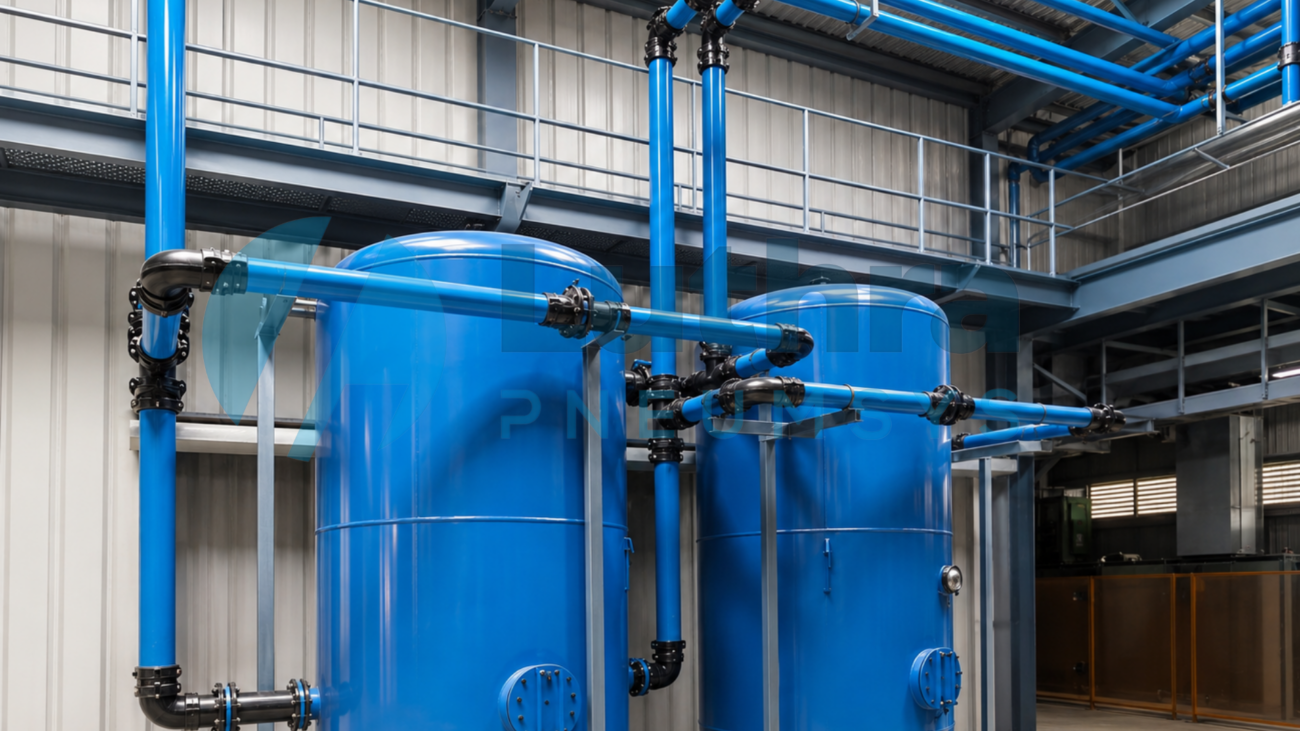
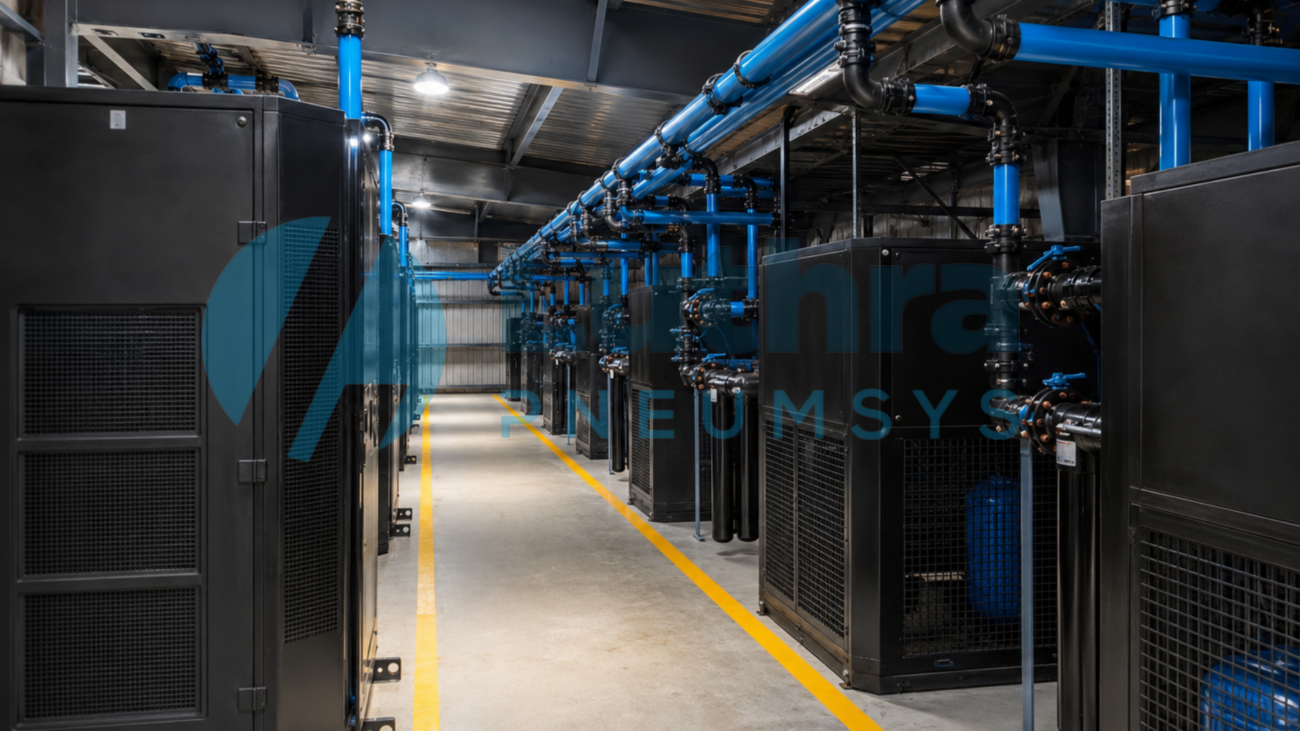
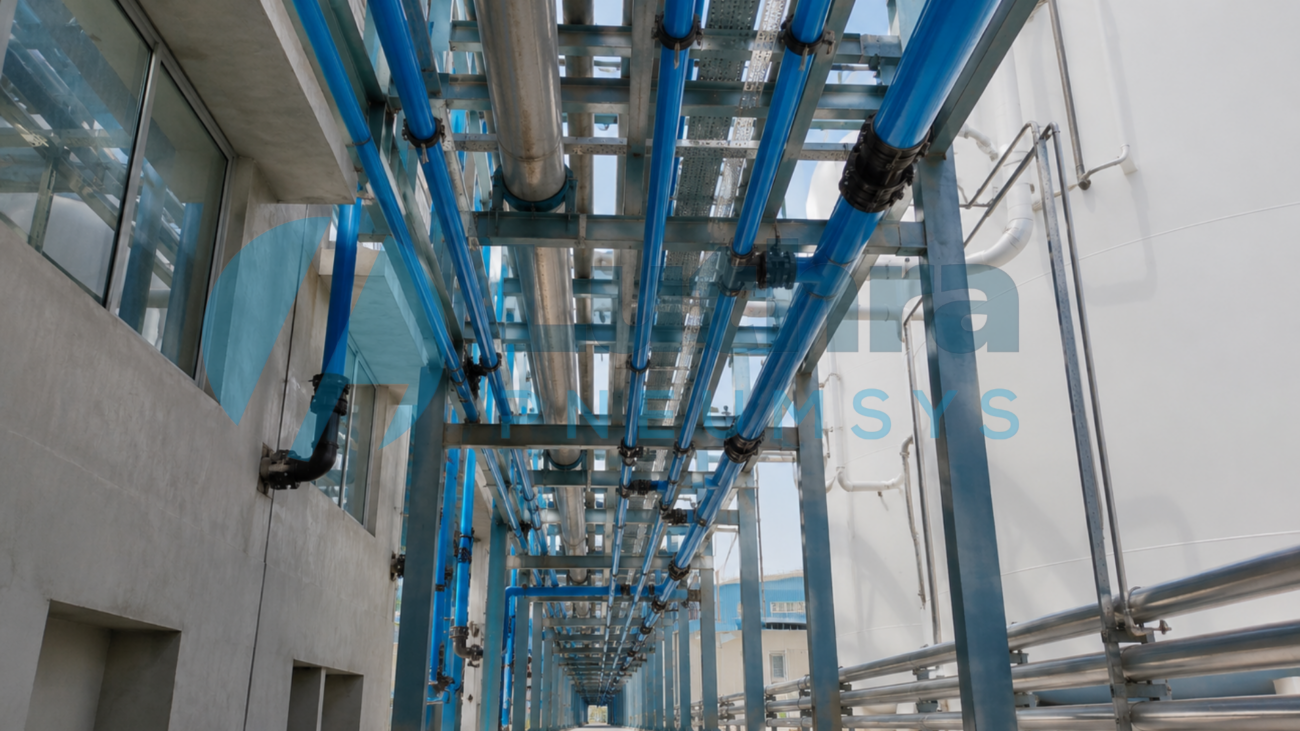
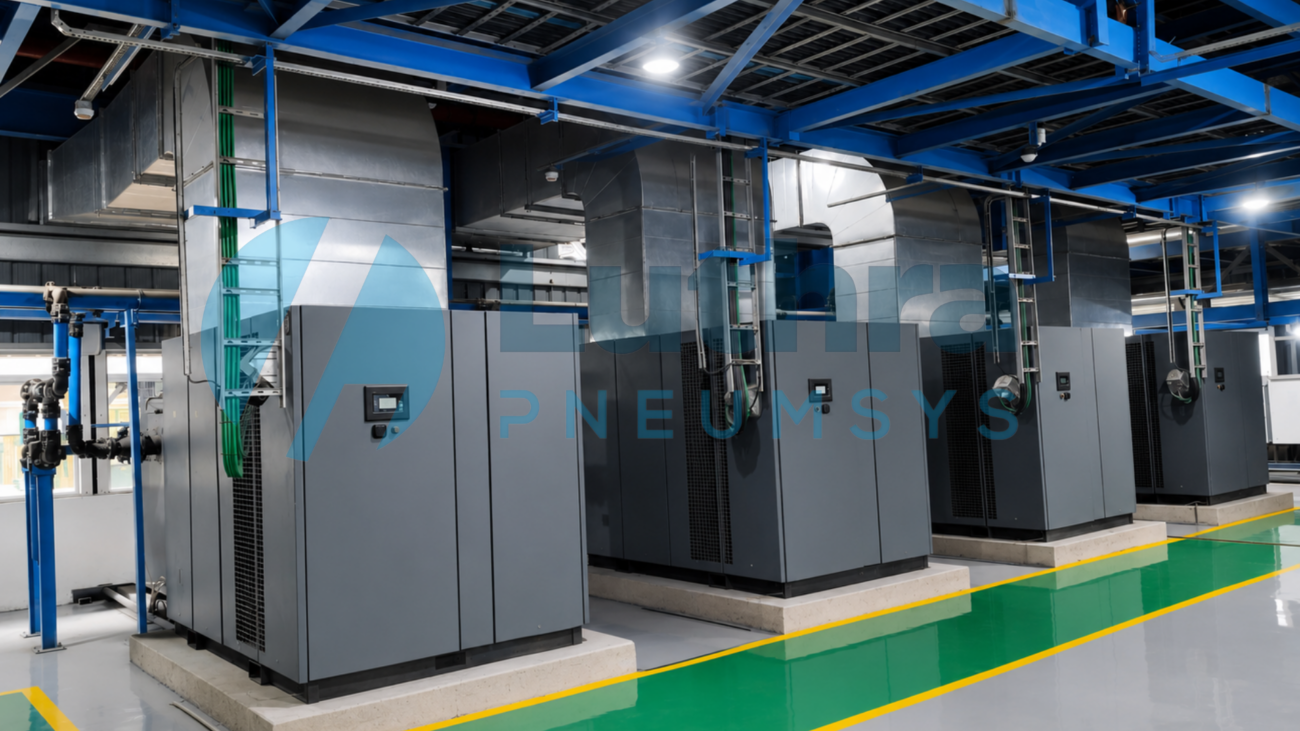
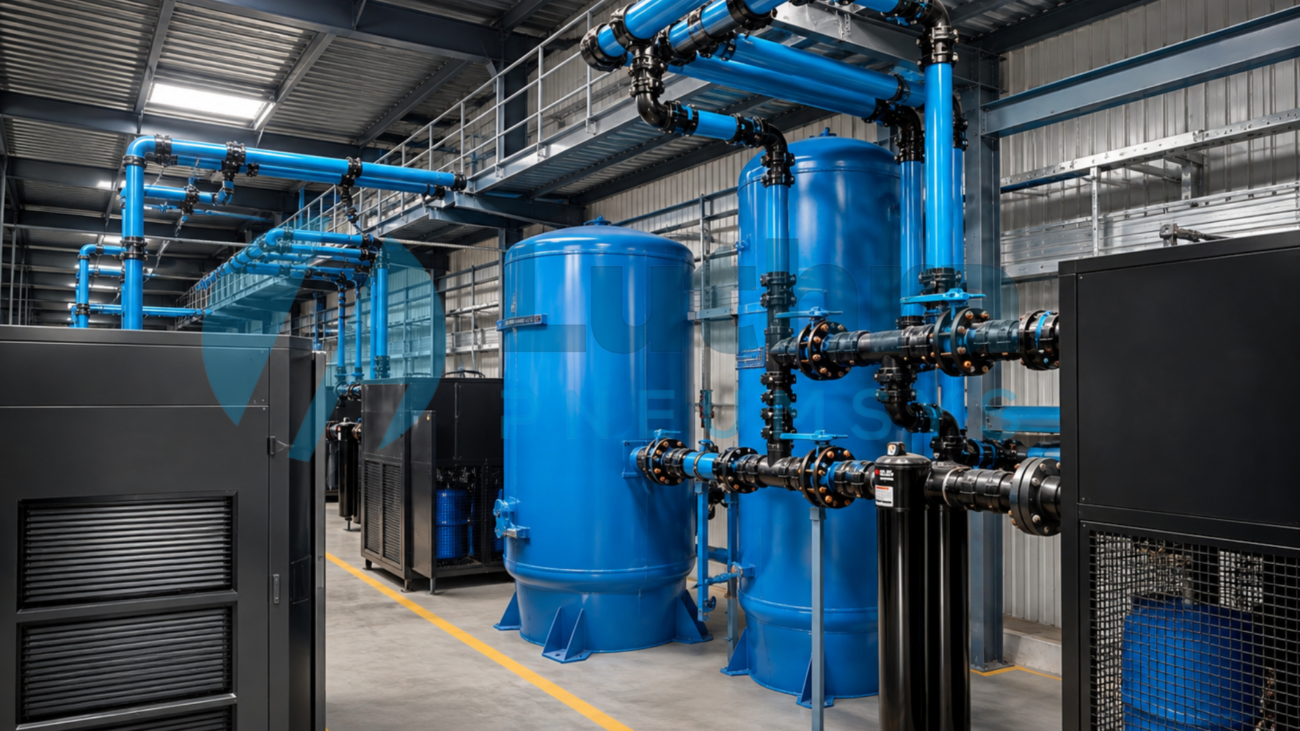
A complete compressed air piping system generally includes several interconnected components. The compressor supplies compressed air, while the main distribution pipeline transports it throughout the facility. Branch lines then deliver air to individual machines, workstations, and pneumatic equipment.
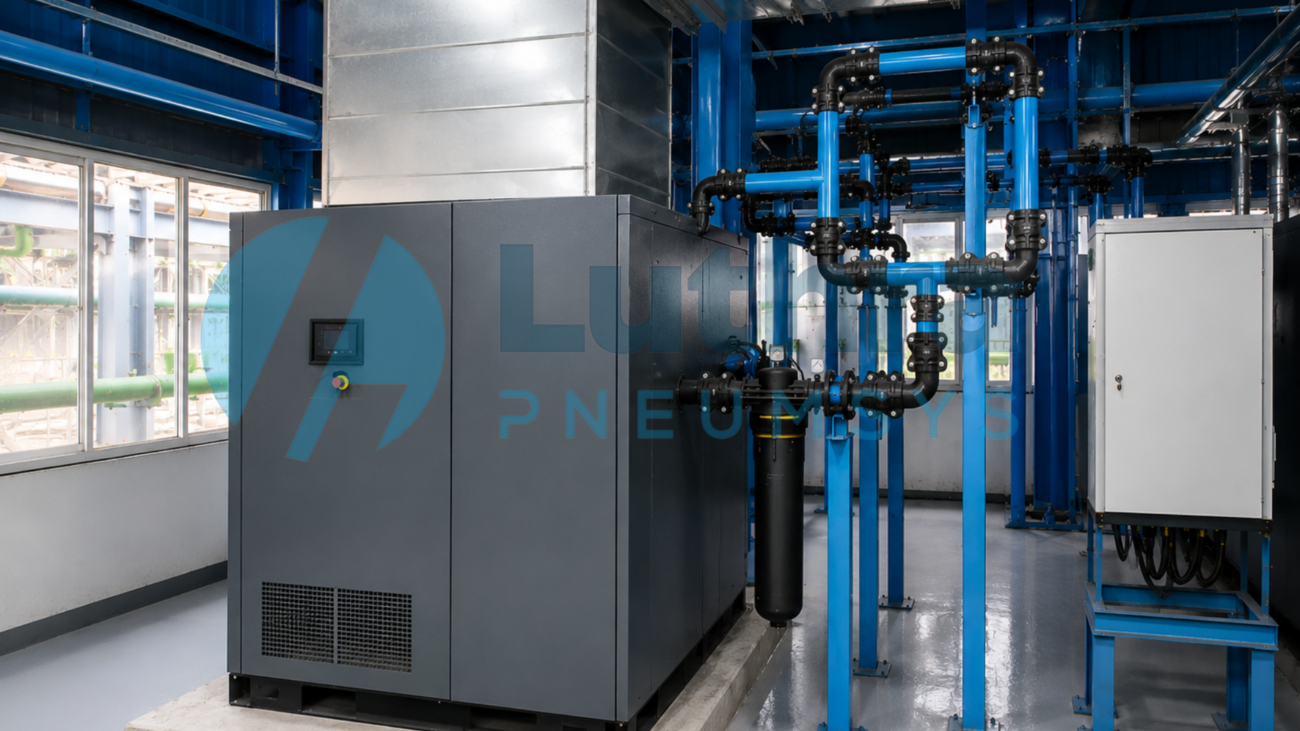
Air treatment components such as filters, dryers, regulators, and drains may be incorporated depending on the quality of compressed air required by the application. These components can help control contaminants, moisture, and pressure before air reaches sensitive equipment.
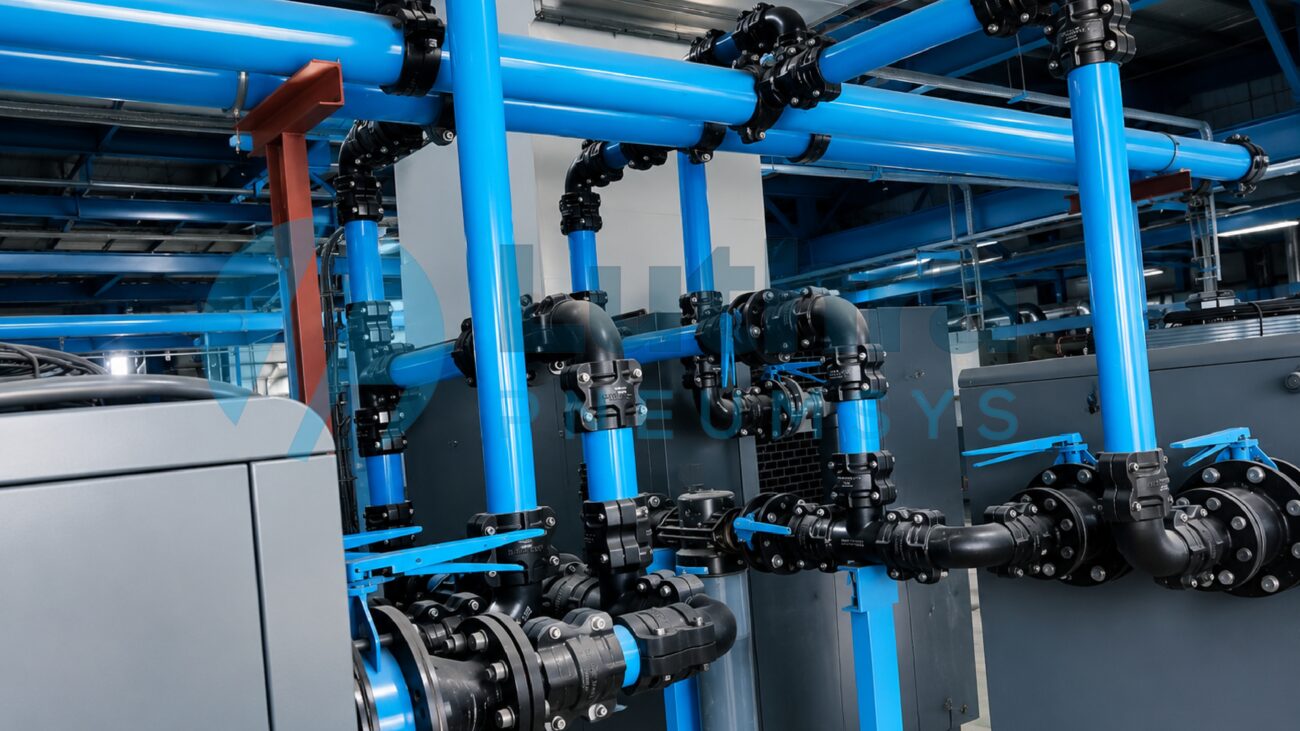
Valves and fittings are equally important because they provide control and connection points throughout the network. Properly selected components can simplify maintenance and allow specific sections of the piping network to be isolated when required.
| Component | Primary Function | Industrial Benefit |
|---|---|---|
| Main Pipeline | Transports compressed air | Efficient distribution |
| Branch Lines | Supplies individual equipment | Convenient air access |
| Valves | Controls airflow | Easier isolation and maintenance |
| Filters | Removes contaminants | Cleaner compressed air |
| Regulators | Controls pressure | Suitable operating pressure |
| Drains | Removes accumulated moisture | Helps protect the system |
Designing an Efficient Industrial Piping Network
The design of a compressed air piping system should begin with an assessment of the facility’s air demand. Compressor capacity, operating pressure, number of machines, peak consumption, working hours, and potential expansion should all be considered before finalizing the network.
Pipe diameter is another critical factor. Pipes that are too small can create excessive pressure drops, while an unnecessarily oversized network may increase installation costs. Selecting an appropriate diameter according to airflow requirements helps create a practical balance between performance and investment.
The distribution layout should also be planned carefully. Main headers, branch connections, isolation valves, drains, and points of use should be positioned to support smooth operation. The route should avoid unnecessary bends and restrictions wherever possible because these can influence airflow and pressure performance.
Future expansion should also be considered during design. Industrial facilities often add machinery or increase production capacity over time. Building flexibility into the initial piping design can make future modifications easier and potentially reduce installation disruption.
Materials and Installation Considerations
The material selected for a compressed air piping system should be suitable for the operating pressure, environment, temperature, and application. Different industrial projects may require different piping materials and connection methods, so material selection should be based on project-specific requirements rather than using the same solution for every facility.
Installation quality is equally important. Pipes should be correctly aligned and adequately supported to create a stable distribution network. Connections should be properly secured, and valves and other components should remain accessible for inspection and maintenance.
Moisture management should also be incorporated into the piping design. Condensation can accumulate within compressed air systems, particularly where air cools after compression. Suitable drainage arrangements and appropriate air-treatment equipment can help manage moisture and protect downstream pneumatic equipment.
Before commissioning, the complete network should be inspected for installation issues and potential leakage. Testing and verification can help ensure that the system is ready to supply compressed air to production equipment under the required operating conditions.
Benefits of a Professionally Installed System
A professionally planned compressed air piping system can support improved air distribution throughout an industrial facility. Maintaining appropriate pressure at points of use can help pneumatic equipment operate more consistently and reduce problems associated with inadequate airflow.
An organized piping network can also simplify maintenance. Clearly planned isolation points and accessible components make it easier for maintenance teams to inspect or service sections of the system without unnecessarily disturbing other areas.
Another important benefit is operational efficiency. A well-designed network can reduce avoidable pressure losses and help minimize the effects of air leakage. Since compressed air production can represent a significant operating expense, improving distribution efficiency can contribute to better overall system management.
The right piping solution can also provide greater flexibility for industrial growth. With appropriate planning, additional machines or production areas can potentially be connected to the network without completely redesigning the existing installation.
Choosing an Industrial Air Compressor Piping Solution
When selecting an installation partner, industries should consider experience with industrial compressed air applications, understanding of piping layouts, component selection, installation practices, and commissioning requirements. The provider should be able to understand the facility’s operational requirements before recommending a solution.
A suitable compressed air piping system should be designed around actual airflow requirements rather than simply following a standard layout. Site conditions, compressor specifications, equipment locations, production requirements, and future expansion plans should all be considered.
Luthra Pneumsys focuses on air compressor piping installation for industrial applications. Businesses can discuss their specific compressed air requirements and explore an appropriate piping approach for their facility.
Compressed Air Piping System Cost Factors
The cost of a compressed air piping system varies depending on the size and complexity of the installation. Pipe length, diameter, material, number of connection points, valves, fittings, air-treatment components, installation conditions, and required accessories can all influence the overall project cost.
A small workshop distribution network will naturally have different requirements from a large manufacturing facility with multiple production lines. Therefore, obtaining a project-specific assessment is important before estimating the final installation investment.
| Cost Factor | Impact on Project |
|---|---|
| Pipe Length | Influences material and installation requirements |
| Pipe Diameter | Depends on airflow and pressure requirements |
| Number of Outlets | Affects branch piping and fittings |
| Pipe Material | Influences material cost and installation method |
| Valves & Fittings | Adds control and connection points |
| Air Treatment | Depends on required compressed air quality |
| Installation Complexity | Affects labor and project duration |
Maintenance of a Compressed Air Piping System
Regular inspection helps maintain the performance of an industrial compressed air piping system. Businesses should periodically inspect joints, valves, fittings, drains, and distribution points for leakage or visible damage.
Leak detection is particularly important because compressed air leaks can remain unnoticed while continuously increasing compressor workload. Addressing leaks promptly can help maintain system efficiency and reduce unnecessary air consumption.
Drainage and air-treatment components should also be inspected according to the operating environment and equipment requirements. Filters may require servicing, while drains should be checked to ensure moisture is being removed effectively.
A planned maintenance approach allows potential problems to be identified before they become major operational disruptions. This can support reliable compressed air availability and longer service life for the distribution network.
Conclusion
A reliable compressed air piping system is an important part of an efficient industrial compressed air infrastructure. From initial design and pipe selection to installation, testing, and maintenance, every stage can influence the performance of the overall network.
Businesses should consider their current air requirements, operating pressure, equipment locations, moisture management needs, maintenance requirements, and future expansion plans before installing a distribution network. With professional planning and installation, industries can establish a structured compressed air supply network designed around their operational requirements.
For industrial compressed air piping system installation requirements in India, businesses can explore air compressor piping installation solutions from Luthra Pneumsys and discuss their specific project requirements.
Frequently Asked Questions
What is a compressed air piping system?
A compressed air piping system is a network of pipes, valves, fittings, and related components used to distribute compressed air from a compressor to pneumatic equipment and points of use within an industrial facility.
Why is compressed air piping design important?
Proper design helps distribute compressed air efficiently while considering airflow, pressure requirements, pipe sizing, equipment locations, leakage, moisture management, maintenance access, and future expansion.
Which industries use compressed air piping systems?
Compressed air distribution is commonly used in manufacturing, automotive, engineering, pharmaceuticals, food processing, packaging, textiles, workshops, and other industrial applications requiring pneumatic equipment.
How can pressure loss in piping be reduced?
Appropriate pipe sizing, efficient routing, minimizing unnecessary bends and restrictions, maintaining connections, and controlling air leakage can help reduce avoidable pressure losses.
How often should compressed air piping be inspected?
Inspection frequency depends on operating conditions and the criticality of the system. Regular checks for leakage, damaged components, moisture, and connection problems are recommended as part of an industrial maintenance program.
Can a piping system be expanded later?
Yes. A properly planned system can incorporate future expansion requirements. Considering additional equipment and production areas during the original design can make later modifications more practical.