Introduction to Air Compressor Piping System
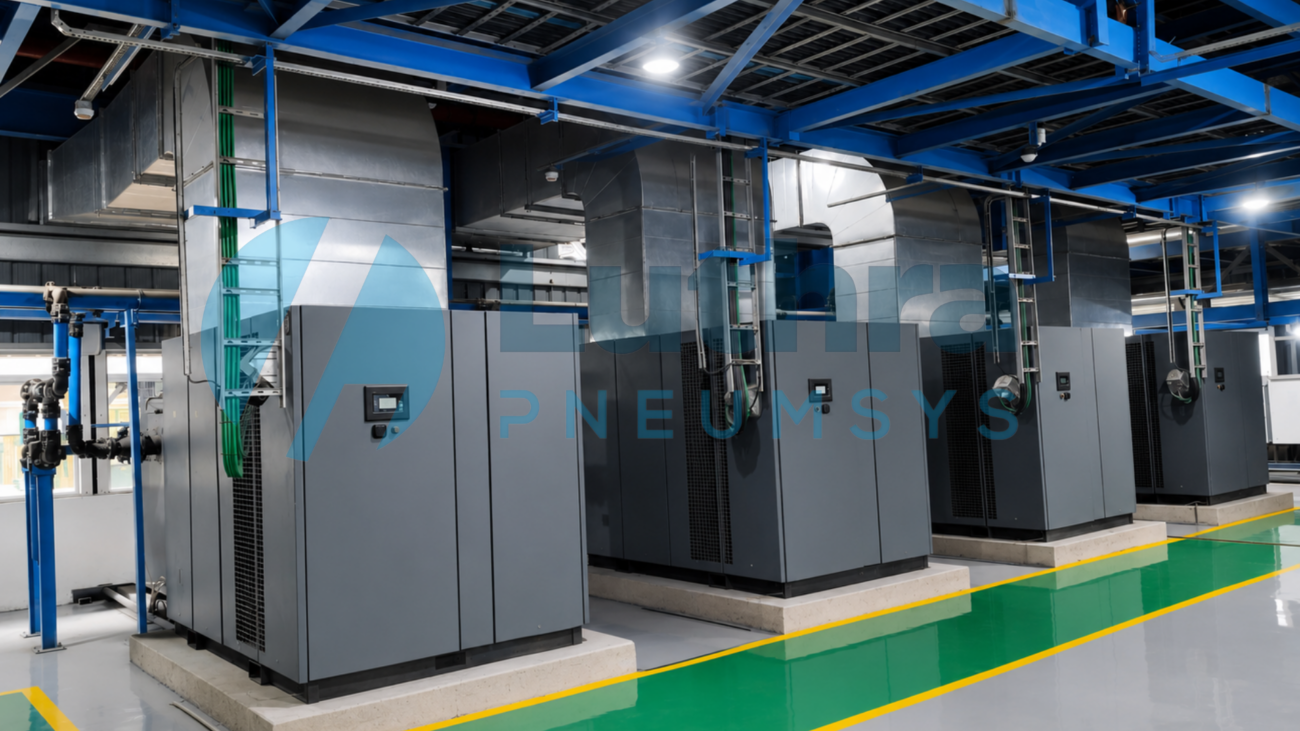
An efficient air compressor piping system is an essential part of every industrial compressed air installation. While the compressor generates compressed air, the piping network is responsible for transporting that air safely and efficiently to different machines, production areas and pneumatic equipment. A properly planned system can improve air delivery, maintain stable pressure and support reliable manufacturing operations. In India, where industries are continuously focusing on productivity and energy efficiency, selecting the right piping solution has become increasingly important.
A well-designed compressor air pipeline helps minimise pressure drops between the compressor room and points of use. Poorly selected pipe sizes, unnecessary bends, leakage and unsuitable fittings can restrict airflow and increase the energy required to operate compressors. This can directly affect operating costs and production efficiency. Therefore, industrial businesses should consider piping design as an important part of their overall compressed air strategy rather than treating it as a simple connection between the compressor and equipment.
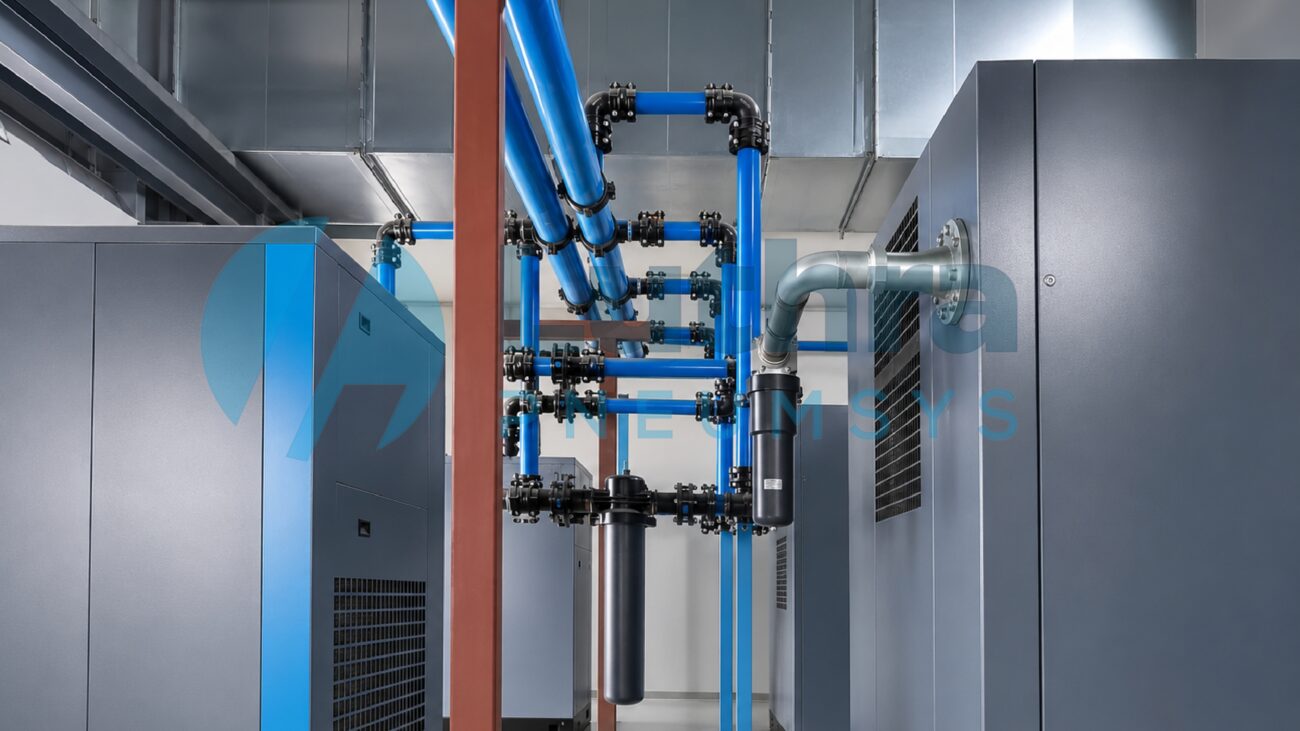
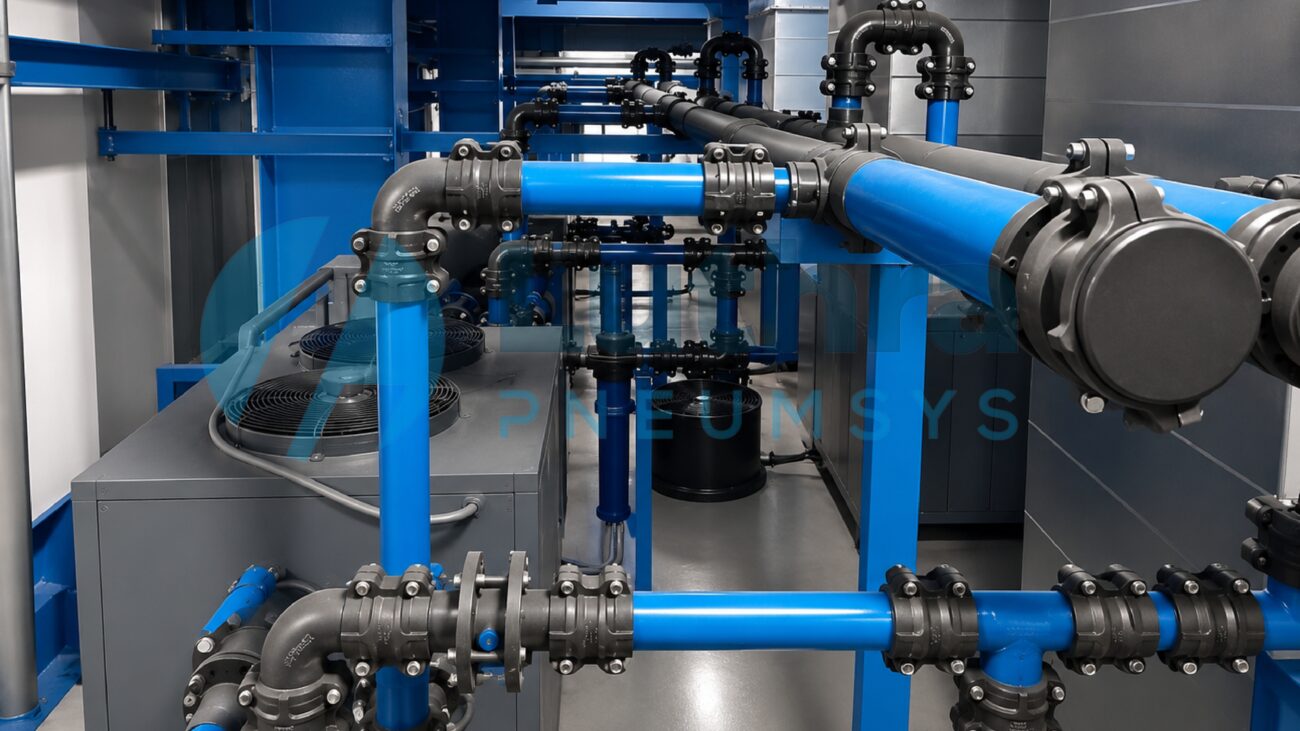
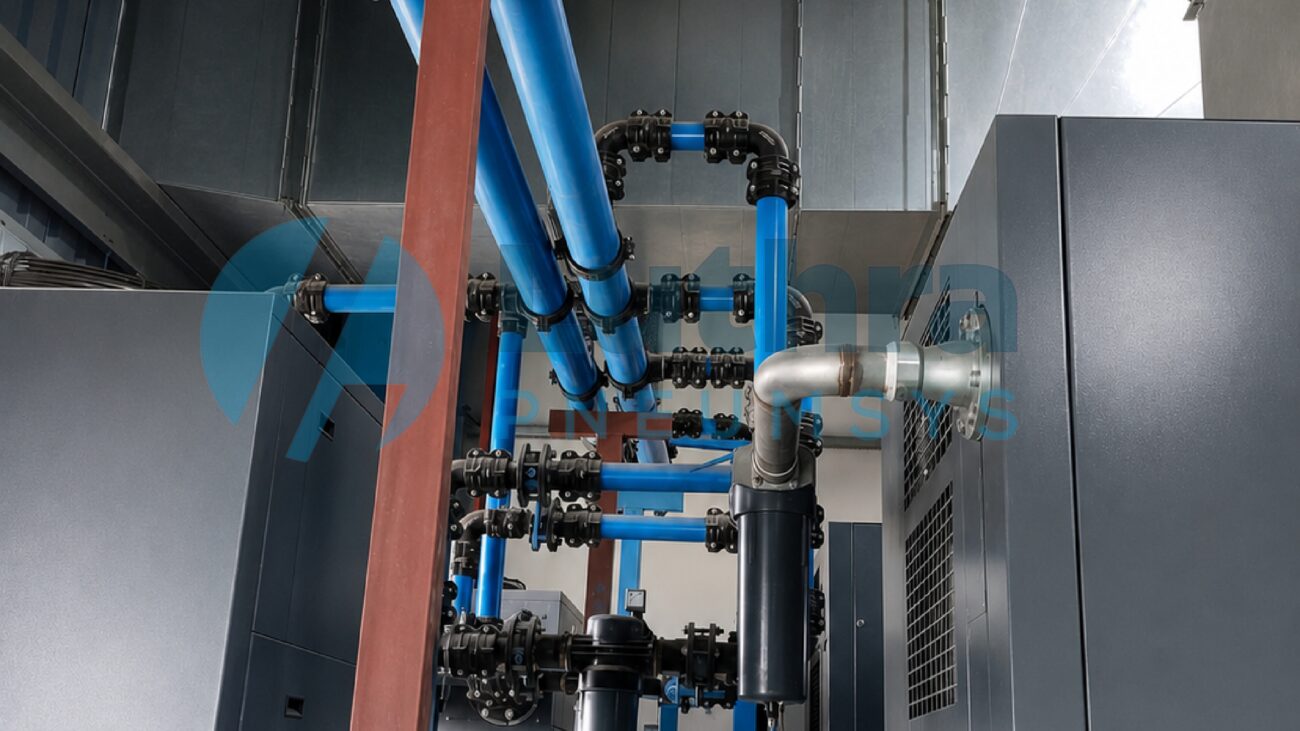
Modern industrial facilities require piping systems that can withstand operating conditions while providing smooth air distribution. Luthra Pneumsys manufactures aluminium and stainless-steel piping solutions for compressed air and other industrial applications. Its product range includes aluminium pipes, aluminium push-fit systems, aluminium groove-fit systems, stainless-steel pipes, stainless-steel groove-fit systems and stainless-steel press-fit systems.
For industrial users across India, the right piping material and layout can make a significant difference to long-term performance. Luthra Pneumsys has locations and operations supporting major industrial centres including Mumbai, Bengaluru, Chennai, Coimbatore, Delhi, Kolkata and Pune.
Why Proper Compressor Air Pipeline Design Matters?
The main purpose of a compressor air pipeline is to deliver compressed air from the generation point to the final application with minimum pressure loss. Every component, including pipes, elbows, tees, valves and connectors, contributes to the overall resistance of the system. A carefully designed network considers airflow requirements, pipe diameter, operating pressure, distance and future expansion requirements before installation begins.
An undersized pipeline can create excessive pressure drop, forcing the compressor to work harder to maintain the required pressure. This can increase energy consumption and place additional demand on the compressor. In contrast, correctly sized piping allows compressed air to move more efficiently through the network and helps pneumatic equipment receive a more consistent supply.
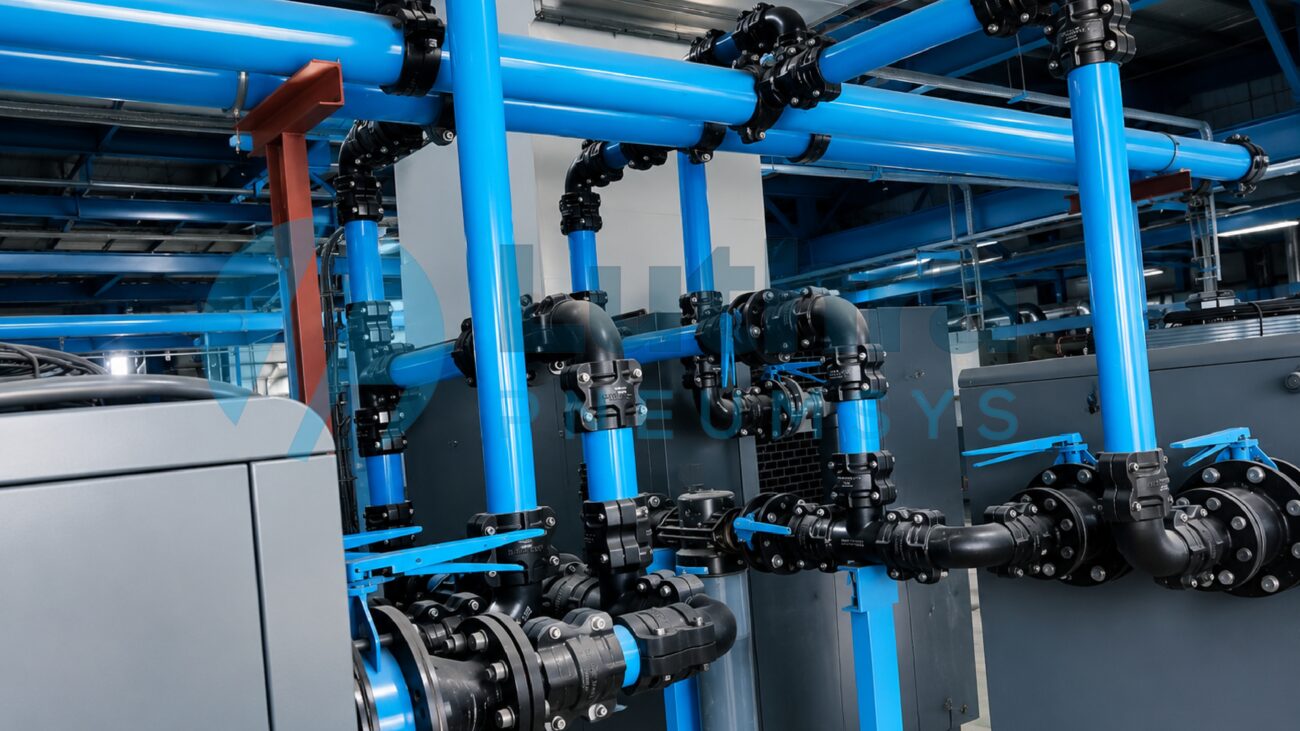
The layout of an air compressor piping system is equally important. A ring or loop arrangement is commonly preferred for industrial distribution because compressed air can reach usage points from multiple directions. This can help improve pressure stability and reduce the impact of individual branches. Properly positioned isolation valves can also make maintenance easier without requiring the entire system to be shut down.
Leakage is another important consideration. Even small leaks can result in continuous compressed air loss, causing compressors to run unnecessarily. A high-quality piping system with dependable joints and fittings can help reduce leakage-related losses. Regular inspection and maintenance should also be incorporated into the operating routine to maintain system efficiency.
Choosing the Right Material for Air Piping
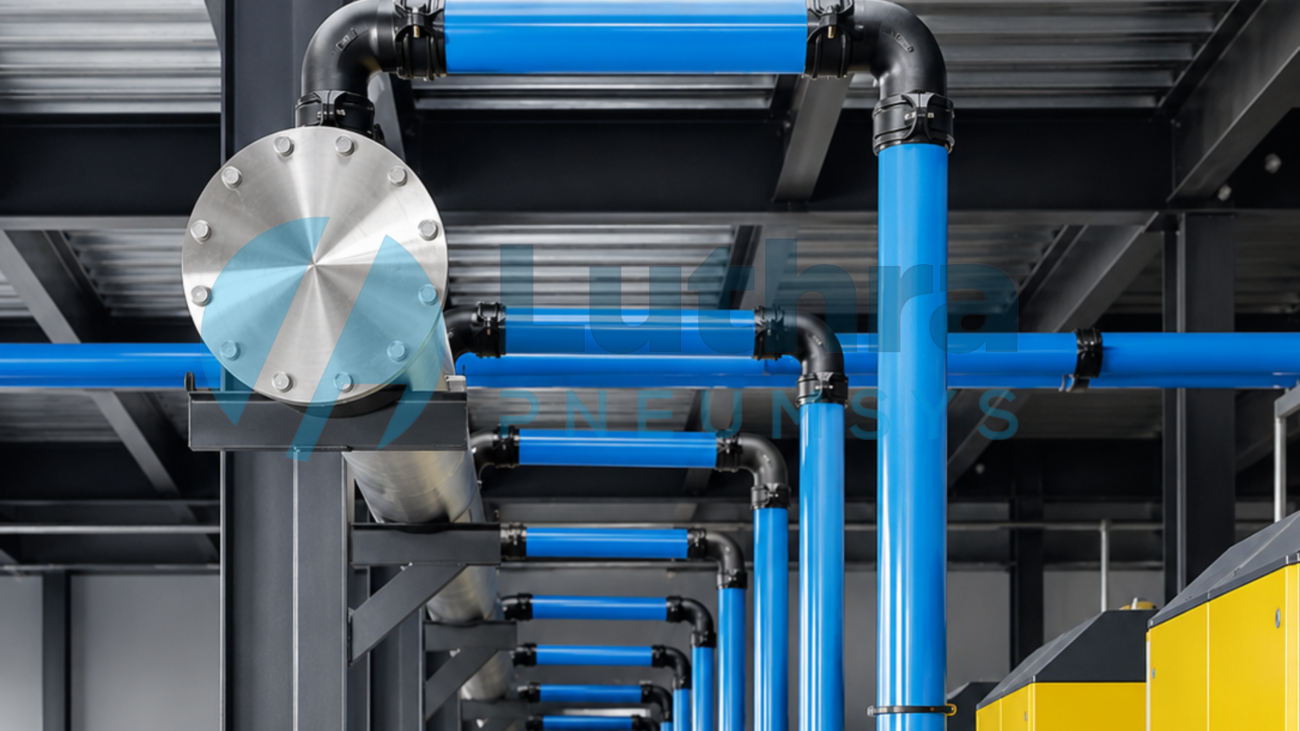
Aluminium is widely considered a practical material for modern compressed air installations because it is lightweight, easy to handle and suitable for efficient air distribution. Aluminium piping can simplify installation and modification, which can be particularly useful for factories where production layouts may change over time. Luthra Pneumsys offers aluminium piping in sizes ranging from 20 mm to 250 mm, with push-fit and groove-fit options available for different applications.
Stainless steel is another suitable option where durability and resistance to demanding operating environments are important. Luthra Pneumsys provides stainless-steel piping solutions ranging from 20 mm to 350 mm, along with stainless-steel groove-fit and press-fit ranges.
When selecting the material for an air compressor piping system, businesses should evaluate operating pressure, air quality, environmental conditions, installation requirements and expected service life. The choice should not be based only on initial purchase cost. A suitable piping material can provide better long-term reliability, easier maintenance and improved overall system performance.
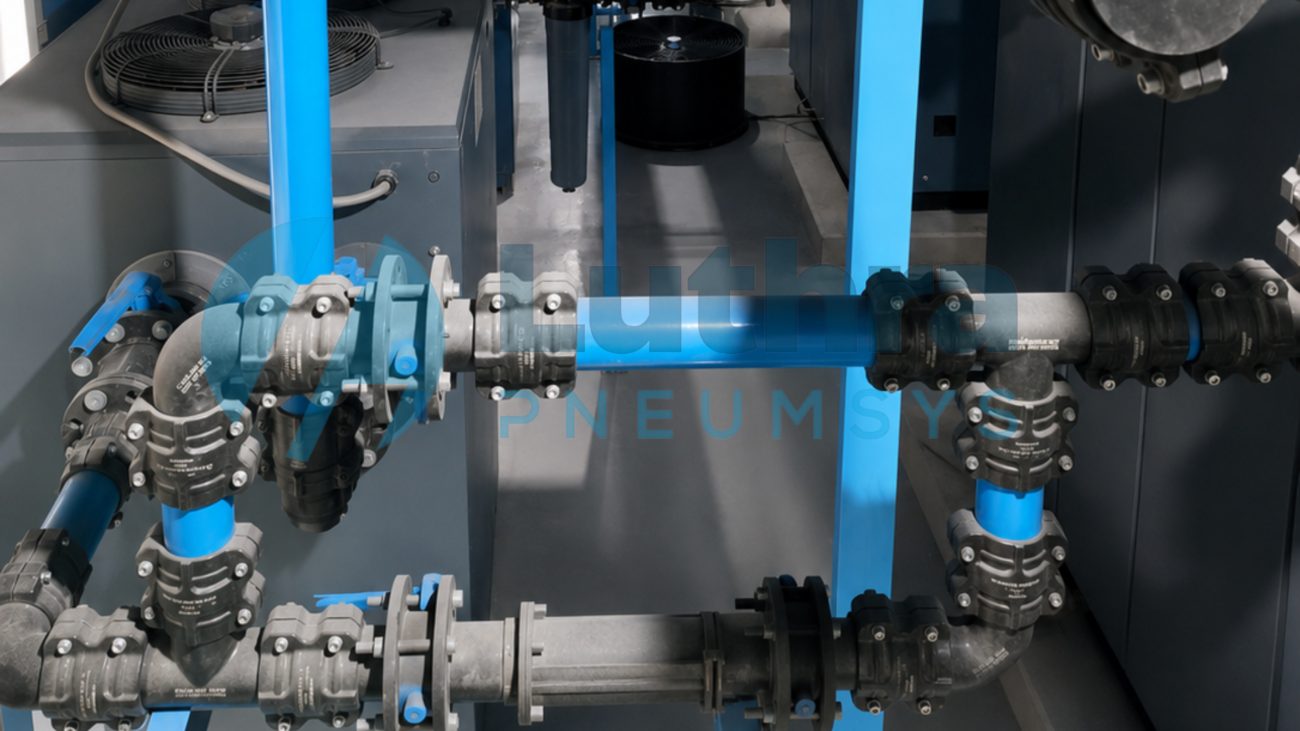
The quality of joints and connections also deserves careful attention. Poorly installed fittings can become potential leakage points and may compromise the efficiency of the complete network. Using compatible pipes, fittings and connection systems from a reliable manufacturer helps create a more dependable compressed air distribution network.
Designing an Efficient Air Compressor Piping System
Correct pipe sizing is one of the most important factors when designing an air compressor piping system. The pipe diameter should be selected according to the required airflow, distance and operating pressure. A pipeline that is too small can restrict airflow, while an unnecessarily oversized system may increase installation costs. Proper engineering helps achieve an appropriate balance between performance and investment.
The distribution network should also be planned around present and future requirements. Industrial facilities often add machines or production lines over time. Designing the pipeline with suitable capacity for future expansion can prevent costly modifications later. Strategically positioned branch connections can make it easier to extend the system as production requirements change.
Pipe routing should minimise unnecessary bends and restrictions. Every additional fitting can create resistance to airflow. A well-planned layout keeps the route practical while reducing avoidable pressure losses. Drainage and moisture management should also be considered because compressed air systems can contain moisture that needs to be properly managed before it reaches sensitive equipment.
Professional installation and testing are important final stages. Once the compressor air pipeline has been installed, the system should be checked for leaks, pressure stability and correct operation. Thorough testing can identify installation issues before the network is placed into regular production service.
Benefits of a Modern Compressor Air Pipeline
A properly designed compressor air pipeline can contribute to improved energy efficiency. When compressed air travels through a low-resistance network, the compressor does not need to compensate excessively for avoidable pressure losses. This can help reduce unnecessary energy consumption and support lower operating costs.
Reliable air distribution can also improve pneumatic equipment performance. Manufacturing equipment such as pneumatic tools, actuators, cylinders and automation systems depends on a consistent compressed air supply. Stable pressure can support smoother operation and help reduce interruptions caused by inadequate air delivery.
Modern piping solutions can also simplify maintenance and future modifications. Systems using suitable connection technologies can make installation, extension and component replacement more manageable. This is particularly valuable for industrial facilities where production requirements frequently evolve.
Luthra Pneumsys focuses on energy-efficient and sustainable piping solutions for compressed air and other industrial applications. The company states that its manufacturing and product approach is centred on reliability, efficiency and sustainable design. Its website also states that its connectors manufacturing facilities are ISO 9001:2015 certified and that its aluminium pipes have Qualicoat-certified coating.
Applications Across Indian Industries
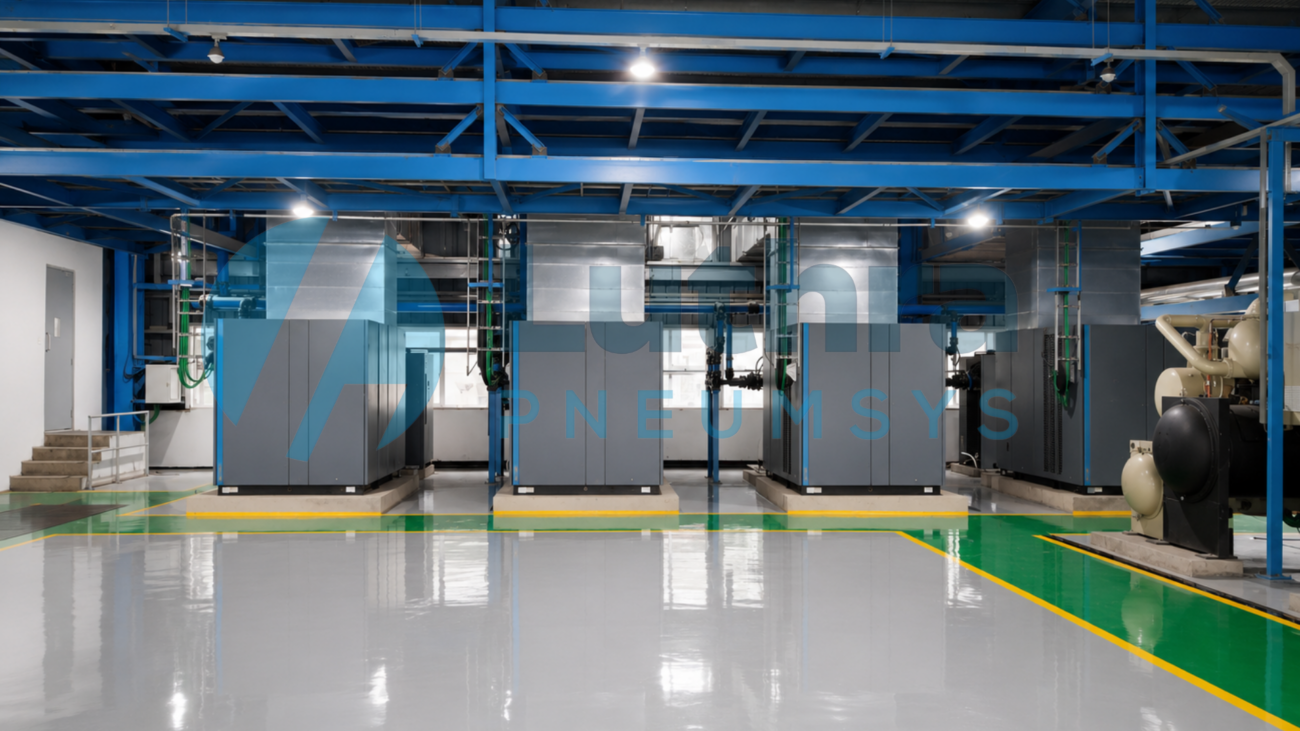
An air compressor piping system is used across a wide range of industrial environments in India. Manufacturing plants rely on compressed air for pneumatic tools, automation equipment, production machinery and various process applications. A properly engineered network helps distribute air to multiple points while maintaining efficient operation.
Automotive and engineering facilities often require extensive compressed air distribution networks because pneumatic equipment can be used throughout production areas. Food-related manufacturing also requires carefully designed air systems where air quality and hygiene considerations are particularly important.
Workshops, fabrication facilities, packaging units and general manufacturing plants can similarly benefit from a reliable compressor air pipeline. The system can be configured according to the specific airflow requirements and layout of the facility, allowing businesses to establish a distribution network suited to their operational needs.
As Indian industries expand their focus on automation and energy efficiency, compressed air infrastructure is becoming increasingly important. Investing in the right piping design at the planning stage can help businesses create a safer, more reliable and efficient production environment.
Conclusion
A professionally designed air compressor piping system is essential for reliable and energy-efficient compressed air distribution. From pipe sizing and material selection to layout, fittings and testing, every element can influence the performance of the complete network. Businesses should therefore consider long-term efficiency and reliability rather than focusing only on initial installation costs.
A properly engineered compressor air pipeline can support stable pressure, efficient airflow, dependable pneumatic equipment and easier future expansion. With suitable aluminium and stainless-steel piping solutions, industrial facilities across India can develop compressed air networks designed for their specific operational requirements.
Luthra Pneumsys offers industrial piping solutions for compressed air applications, with a range of aluminium and stainless-steel products designed for different installation requirements. Its established presence across major Indian industrial locations makes it a relevant solution provider for businesses planning or upgrading compressed air distribution infrastructure.
Frequently Asked Questions About Air Compressor Piping System
What is an air compressor piping system?
An air compressor piping system is a network of pipes, fittings, valves and connectors used to transport compressed air from a compressor or air treatment system to different points of use within an industrial facility.
What is a compressor air pipeline used for?
A compressor air pipeline carries compressed air to pneumatic machines, tools, automation equipment and other industrial applications. Its design determines how efficiently air reaches each point of use.
Which material is suitable for compressed air piping?
Aluminium and stainless steel are commonly used for industrial compressed air applications. The appropriate material depends on operating conditions, air quality, pressure, environment, installation requirements and project specifications.
Why is pipe sizing important?
Correct pipe sizing helps maintain suitable airflow and minimise unnecessary pressure loss. An undersized pipeline may restrict airflow and increase the energy required to maintain operating pressure.
How can compressed air leakage be reduced?
Leakage can be reduced by using quality pipes and fittings, ensuring proper installation, testing joints after installation and carrying out regular inspection and maintenance of the complete network.